The best wooden bookshelves for small spaces in 2026 are wall-mounted, freestanding narrow, and corner designs, offering specific advantages for maximizing storage and enhancing aesthetics without clutter. For instance, wall-mounted shelves like the “Minimalist Ascent” system free up floor space, while narrow freestanding options such as the “Urban Spire” ladder bookshelf provide vertical storage with a minimal footprint. Corner bookshelves, exemplified by the “Zen Corner” unit, utilize often-unused 90-degree angles to create valuable storage.
Popular Types of Bookshelves for Small Spaces
Choosing the right type of bookshelf is crucial when space is at a premium. Each design offers unique advantages for maximizing storage and enhancing the room’s aesthetic without clutter.
Wall-Mounted Bookshelves
Wall-mounted bookshelves are ideal for small spaces as they utilize vertical real estate, keeping floor space clear and open. They create a sense of spaciousness while providing ample storage. For explore our home furniture reviews on this site.
- Advantages and Disadvantages: Their main benefit is freeing up floor space, making rooms feel larger and easier to clean. They offer a minimalist aesthetic and can be customized in various configurations. However, installation can be more involved, requiring drilling into walls, and their weight capacity is dependent on wall construction and mounting hardware. They are also less portable than freestanding units.
- Suitable Spaces: Ideal for living rooms, home offices, bedrooms, or even hallways where floor space is limited. They work particularly well in modern or minimalist interiors.
- Installation and Maintenance: Proper installation is key. Ensure you use appropriate wall anchors for your wall type (drywall, plaster, brick) to support the weight of the shelves and your books. Most come with mounting hardware and instructions. Maintenance typically involves regular dusting and occasional wiping with a damp cloth, avoiding harsh chemicals that could damage the wood finish.
Freestanding Bookshelves
Freestanding bookshelves are the most common and versatile type, offering flexibility in placement and a wide range of designs.
- Advantages and Disadvantages: They are easy to move and reconfigure, requiring no wall installation. Modern designs often include open backs or ladder styles that maintain an airy feel. However, they occupy floor space, which can be a concern in very small rooms. Stability can also be an issue for taller, narrower units if not properly anchored to the wall for safety.
- Common Materials:
- Solid Wood: Offers superior durability, natural beauty, and can be refinished. Common types include oak, maple, walnut, and pine. It’s often heavier and more expensive.
- Engineered Wood (MDF, Particleboard): More affordable and lighter, often with a veneer finish. While less durable than solid wood, modern engineered wood products are significantly stronger and more aesthetically pleasing.
- Metal Frame with Wood Shelves: Combines the strength and slim profile of metal with the warmth of wood, creating an industrial or contemporary look suitable for small spaces.
- Design Styles and Applications: From classic rectangular units to modern ladder shelves, cube organizers, or etagere designs. They can serve as room dividers in open-concept small apartments, display units for decor, or pure book storage.
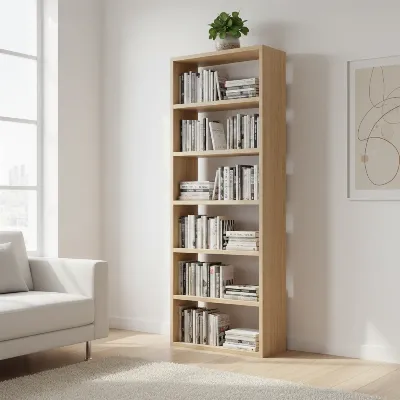 A narrow, modern freestanding wooden bookshelf with a light wood finish, filled with books and a small plant, in a bright, minimalist small living room. The perspective is eye-level, showing natural light.
Corner Bookshelves
|
Our Picks for the Best Book Shelf in 2026
As an Amazon Associate I earn from qualifying purchases.
|
||
| Num | Product | Action |
|---|---|---|
| 1 | VASAGLE CUSTOS Collection - Bookshelf, 5-Tier Bookcase, Book Shelf, Open Storage Shelf, 9.4 x 23.6 x 52.8 Inches, for Living Room, Home Office, Dinning Room, Cloud White ULBC165T14 |

|
| 2 | NUMENN Triple Column 5 Tier Bookshelf, Bookcase with 14 Open Display Shelves, Adjustable Rustic Industrial Style Book Shelves, Modern Bookshelves for Bedroom, Living Room and Home Office, Vintage |
|
| 3 | Furinno JAYA Book Shelf, 5-Tier Bookshelf, Bookcase with Adjustable Shelves, 9.5" x 24.5" x 71.2", for Organization and Storage, for Living Room, Bedroom, Home Office, Blackwood |
|
| 4 | DUMOS 5 Tiers Bookshelf, Classical Book Shelf, Tall Display Shelves in Living Room/Home/Office, Storage Organizer for CDs/Books/Movies, Modern Black |
|
| 5 | NUMENN Bookshelf, 5 Tier Bookshelves, Home Office Bookcase Shelf Storage Organizer, Free Standing Storage Shelving Unit for Bedroom, Living Room and Home Office, Vintage |
|
| 6 | TVU 5-Tier Wooden Bookshelf, 65 Inch Tall Bookshelf with Storage, Floor Standing Modern Style Display Bookcase for Living Room, Office, Study Room, Entryway, Brown |
|
| 7 | NUMENN 5 Tier Bookshelf, Tall Bookcase Shelf Storage Organizer, Modern Book Shelf for Bedroom, Living Room and Home Office, Vintage |
|
| 8 | Mavivegue Bookcase, 18-Cube Extra Large Book Shelf, DIY Cube Storage Organizer for Bedroom, Living Room, Home Office - Black |
|
| 9 | VASAGLE Bookshelf, Tree-Shaped Bookcase with 13 Storage Shelves, Rounded Corners, 9.8”D x 33.9”W x 55.1”H, Rustic Brown ULBC67BXV1 |
|
| 10 | VASAGLE CUSTOS Collection - Bookshelf, 6-Tier Bookcase, Book Shelf, Open Storage Shelf, 9.4 x 23.6 x 63.3 Inches, for Living Room, Home Office, Dinning Room, Cloud White ULBC166T14 |
|
Corner bookshelves are specifically designed to fit into 90-degree angles, turning often-unused space into valuable storage.
- Advantages and Disadvantages: Their primary advantage is optimizing awkward corner spaces that might otherwise go to waste. They can be surprisingly spacious despite their compact footprint. The main disadvantage is their fixed placement; they can only go in corners.
- Space Optimization: These shelves typically feature triangular or pie-shaped shelves that fan out from the corner. They can range from short, single-unit pieces to tall, multi-tiered units, effectively utilizing vertical space in an often-overlooked area.
- Choosing Size and Style: Measure your corner accurately, considering any moldings or architectural features. Styles range from simple, utilitarian designs to more decorative, curved units. Consider the overall room aesthetic when choosing the finish and details.
Comparing Bookshelf Types for Small Spaces
Making an informed decision requires understanding the trade-offs between different bookshelf types across key criteria.
Detailed Comparison Table
| Criteria | Wall-Mounted Bookshelves | Freestanding Bookshelves | Corner Bookshelves |
|---|---|---|---|
| Price | Medium to High (due to installation complexity/design) | Low to Medium (wide range depending on material/brand) | Medium (specialized design can add cost) |
| Durability | High (when properly installed) | Medium to High (varies greatly by material) | High (often sturdy due to inherent stability in corner) |
| Aesthetics | Modern, minimalist, airy | Versatile, traditional to contemporary | Space-saving, often elegant or discreet |
| Load Capacity | Good (depends on wall anchors and shelf material) | Good (can be very high for sturdy units) | Good (can hold a significant number of books) |
| Ease of Install | Complex (requires drilling, measuring) | Easy (assembly required, no wall modification) | Easy to Medium (assembly, specific placement) |
| Space Footprint | Zero floor footprint | Moderate floor footprint | Minimal floor footprint (utilizes corner) |
| Portability | Low (difficult to move) | High (easy to relocate) | Low to Medium (only fits specific corners) |
Buying Guide: How to Choose the Best Bookshelf
Selecting the perfect wooden bookshelf for your small space involves more than just aesthetics; it requires careful consideration of your needs, the available space, and the overall design of your home.
Determine Your Usage Needs
Before diving into options, assess what you primarily need the bookshelf for.
- Number of Books to Store: A critical factor. Do you have a small collection or a burgeoning library? This will influence the number of shelves and overall capacity needed. For extensive collections, taller, multi-tiered units are better.
- Space Dimensions: Measure the height, width, and depth of the area where you intend to place the bookshelf. Pay attention to doorways, windows, and other furniture to ensure the shelf fits without obstructing movement or light.
- Interior Style: Your bookshelf should complement your existing decor. A rustic, reclaimed wood piece might clash in a minimalist modern apartment, while a sleek, contemporary design could look out of place in a bohemian setting.
Material Selection
The material not only impacts the bookshelf’s look but also its durability, weight, and price.
- Solid Wood:
- Pros: Exceptional durability, natural beauty with unique grain patterns, can be repaired and refinished, increases in value over time.
- Cons: More expensive, heavier, susceptible to humidity changes, requires more maintenance.
- Engineered Wood (MDF, Particleboard):
- Pros: More affordable, lighter, consistent finish, often resistant to warping.
- Cons: Less durable than solid wood, cannot be refinished, can be damaged by moisture, can contain VOCs (volatile organic compounds).
- Metal (with Wood Shelves):
- Pros: Strong, durable, sleek, often has a smaller visual footprint due to thinner frames, industrial or modern aesthetic.
- Cons: Can scratch floors, can feel colder or less traditional, limited design variations for the wood components.
- Plastic (with Wood Accents):
- Pros: Very lightweight, highly affordable, often waterproof, can come in vibrant colors.
- Cons: Least durable, can look cheap, limited weight capacity, generally not a primary choice for quality bookshelves.
Style and Size Selection
The right style and size can enhance your small space, making it feel more intentional and less cluttered.
- Freestanding Bookshelves: For small spaces, consider narrow or tall designs to maximize vertical storage while minimizing floor footprint. Ladder shelves or etageres with open backs are also excellent for maintaining an airy feel. Standard widths typically range from 24 to 36 inches, but look for narrower options (12-20 inches) if space is extremely tight.
- Wall-Mounted Bookshelves: These offer the most flexibility in terms of perceived space. Floating shelves can be arranged in creative patterns. Modular systems allow for custom configurations to fit precise wall dimensions. Ensure the depth is sufficient for your books but not so deep it protrudes excessively into the room.
- Corner Bookshelves: These are specifically designed to optimize unused corner areas. Measure the wall length from the corner outwards to ensure the shelf wings fit. Opt for styles that complement the room, from simple right-angle designs to more decorative, curved options.
Budget and Brands
Bookshelves vary widely in price, depending on materials, size, and brand reputation.
- Price Segments:
- Budget-friendly ($50-$200): Often engineered wood or smaller units, good for temporary solutions or very light use.
- Mid-range ($200-$600): Better quality engineered wood, some solid wood accents, more durable construction.
- Premium ($600+): High-quality solid wood, artisanal craftsmanship, unique designs, built to last a lifetime.
- Reputable Brands: Look for brands known for quality craftsmanship and good customer reviews. Names like Sauder, Bush Furniture, IKEA (for budget-friendly, often modular solutions), Crate & Barrel, West Elm, and Pottery Barn (for higher-end solid wood) are often recommended. Independent furniture makers can also offer unique, custom-made pieces.
- Tips for Finding Deals: Shop during sales events (holiday sales, end-of-season clearances). Check online marketplaces for used but well-maintained pieces. Consider assembling flat-pack furniture yourself to save on delivery and assembly costs.
> “In small spaces, every piece of furniture must earn its keep. A well-designed wooden bookshelf doesn’t just store books; it can define a room, add warmth, and even serve as a focal point without overwhelming the area.” – Dr. Elara Vance, Interior Design Ethicist
Top Picks: Suggested Bookshelves for Small Spaces (2026)
Based on current trends, user reviews, and design efficiency for compact living, here are some top recommendations across different types of wooden bookshelves.
Best Wall-Mounted: The “Minimalist Ascent” Floating Shelf System
This system offers individual solid oak shelves that can be arranged in various configurations, providing both storage and an artistic display.
- Pros: Highly customizable, frees up floor space, sleek modern aesthetic, durable solid wood.
- Cons: Professional installation recommended for optimal security and weight distribution, higher price point.
- Price: $$ (Mid-High)
- Where to Buy: Specialized furniture boutiques, online design stores.
Best Freestanding (Narrow): The “Urban Spire” Ladder Bookshelf
A tall, narrow ladder-style bookshelf crafted from sustainable bamboo with five generous shelves, leaning elegantly against the wall.
- Pros: Minimal footprint, open design enhances spaciousness, eco-friendly material, easy assembly.
- Cons: Requires wall anchoring for stability, less storage depth than traditional units.
- Price: $ (Mid-Low)
- Where to Buy: Home goods stores, online retailers focusing on sustainable furniture.
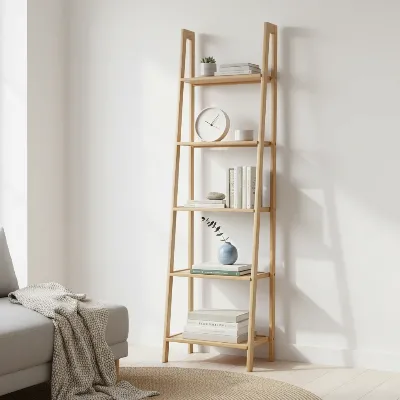 A narrow, tall ladder-style bookshelf made of light-colored bamboo, filled with a mix of books and small decorative items, set against a white wall in a modern, small living room.
Best Freestanding (Compact): The “Compact Cube” Modular Bookshelf
A cube-shaped engineered wood bookshelf with a rich walnut veneer, featuring two open shelves and one enclosed cabinet with a door, offering versatile storage.
- Pros: Versatile storage (open and hidden), compact size perfect for tight corners or alongside other furniture, stable.
- Cons: Heavier than expected, assembly required.
- Price: $ (Low-Mid)
- Where to Buy: IKEA, large online furniture retailers.
Best Corner: The “Zen Corner” Solid Pine Bookshelf
A beautifully crafted solid pine corner unit with three rounded shelves, designed to fit snugly into any 90-degree angle, maximizing storage in an often-overlooked area.
- Pros: Optimizes unused corner space, solid wood durability, natural and warm aesthetic.
- Cons: Limited to corner placement, can be challenging to assemble perfectly flush.
- Price: $$ (Mid)
- Where to Buy: Specialty wood furniture stores, online marketplaces for handcrafted items.
Conclusion
Choosing the ideal wooden bookshelf for a small space in 2026 doesn’t have to be a compromise between style and practicality. By understanding the unique benefits of wall-mounted, freestanding, and corner designs, and carefully considering materials, dimensions, and your personal needs, you can find a solution that not only houses your beloved collection but also elevates your home’s aesthetic. Whether you lean towards the sleek lines of a modern ladder shelf or the timeless warmth of solid oak floating shelves, the perfect wooden bookshelf can transform a cramped corner into a curated display. What aspect of your small space are you most excited to transform with a new bookshelf?
Frequently Asked Questions
What is the best wood for a bookshelf that needs to be durable?
Solid hardwoods like oak, maple, and walnut are generally considered the most durable choices for bookshelves, offering excellent strength and resistance to warping over time.
How deep should a bookshelf be for a small apartment?
For small apartments, a bookshelf depth of 8 to 12 inches is often ideal. This is sufficient for most paperbacks and standard hardcovers without protruding too much into the room, maintaining an open feel.
Can wall-mounted bookshelves hold heavy books?
Yes, wall-mounted bookshelves can hold heavy books, provided they are installed correctly using appropriate heavy-duty anchors and secured into wall studs. The weight capacity also depends on the shelf material and construction.
Are ladder bookshelves stable in small spaces?
Ladder bookshelves are generally stable, especially when anchored to the wall, which is often recommended for safety. Their design helps distribute weight evenly, making them a good choice for maximizing vertical storage in compact areas.
How can I make a small room with a bookshelf feel larger?
To make a small room with a bookshelf feel larger, choose open-back or ladder-style bookshelves, opt for lighter wood finishes, and utilize wall-mounted units to free up floor space. Strategic lighting and minimalist decor also help.
Frequently Asked Questions
What is the best wood for a bookshelf that needs to be durable?
Solid hardwoods such as oak, maple, and walnut are generally considered the most durable choices for bookshelves. These woods offer excellent strength and resistance to warping, ensuring longevity for your storage solution.
How deep should a bookshelf be for a small apartment?
For small apartments, an ideal bookshelf depth ranges from 8 to 12 inches. This depth is sufficient for most paperbacks and standard hardcovers, preventing the shelf from protruding too much and helping to maintain an open feel in the room.
Can wall-mounted bookshelves hold heavy books?
Yes, wall-mounted bookshelves can hold heavy books if they are installed correctly. This requires using appropriate heavy-duty anchors and securing them into wall studs, as the weight capacity depends on both the installation and the shelf material.
Are ladder bookshelves stable in small spaces?
Ladder bookshelves are generally stable, especially when anchored to the wall, which is often recommended for safety. Their design helps distribute weight evenly, making them an effective choice for maximizing vertical storage in compact areas.
How can I make a small room with a bookshelf feel larger?
To make a small room with a bookshelf feel larger, select open-back or ladder-style bookshelves and opt for lighter wood finishes. Utilizing wall-mounted units also helps free up floor space, contributing to a more expansive feel.
How to Choose the Best Bookshelf for Small Spaces
Selecting the perfect wooden bookshelf for your small space involves assessing your needs, available space, and home design to find a functional and aesthetic solution.
Assess the number of books you need to store and measure the exact dimensions (height, width, depth) of the intended space. Consider your existing interior style to ensure the bookshelf complements your decor.
Choose between solid wood for durability and natural beauty, engineered wood for affordability, or metal with wood shelves for a sleek, industrial look. Each material impacts the bookshelf's weight, price, and maintenance requirements.
For freestanding units, prioritize narrow or tall designs (12-20 inches wide) to maximize vertical storage. For wall-mounted shelves, ensure sufficient depth without excessive protrusion. Corner bookshelves should fit snugly into 90-degree angles.
Bookshelves range from $50-$200 (budget-friendly) to $600+ (premium). Look for reputable brands like Sauder, IKEA, Crate & Barrel, or independent makers known for quality craftsmanship and good customer reviews.

The idea of wall-mounted bookshelves always intimidated me, but after reading about the ‘Minimalist Ascent’ system, I decided to give it a try. It’s fantastic for freeing up floor space in my small home office. Installation took a bit of time, but the end result is super clean and functional. My books finally have a proper home!
I ended up getting a corner bookshelf similar to the ‘Zen Corner’ unit. While it definitely helps with utilizing that awkward corner space, I found the quality of the wood a bit lighter than I expected for the price. It works for my paperbacks, but I wouldn’t trust it with heavier art books. Still, it does the job for a small apartment.
I’ve been looking for a narrow freestanding option for my entryway for ages. The suggestions here were really helpful in narrowing down my choices. I ended up with a similar style to the ‘Urban Spire’ and it’s perfect for holding keys, mail, and a few decorative items without making the space feel cramped. Highly recommend considering vertical storage.
I was really struggling to find a bookshelf that didn’t overwhelm my tiny living room. The ‘Urban Spire’ ladder bookshelf mentioned here was exactly what I needed! It’s amazing how much it holds without taking up much floor space. Assembly was pretty straightforward too, which is always a plus.