Solid wood bookshelves are a definitive choice for homeowners prioritizing longevity, timeless aesthetics, and robust performance, offering unparalleled durability and natural beauty that deepens with age. Unlike engineered wood counterparts, solid wood pieces are built to last for generations. This guide explores popular types, crucial buying considerations, and expert recommendations to help you find the perfect piece to improve your living space.
Popular Types of Solid Wood Bookshelves
Solid wood bookshelves come in a diverse array of designs, each offering unique advantages for different spaces and aesthetic preferences. Understanding these categories is the first step in finding the ideal fit for your home.
Freestanding Bookshelves
Freestanding bookshelves are perhaps the most common and versatile type, designed to stand independently against a wall or even as a room divider. Their self-supporting structure makes them easy to move and rearrange, offering flexibility in your decor.
These pieces typically boast a robust construction, often made from hardwoods like oak, walnut, cherry, or maple, ensuring they can support significant weight without sagging over time. Pine is also a popular softwood option, known for its attractive grain and affordability. From classic traditional designs with ornate detailing to sleek, minimalist modern styles, freestanding bookshelves can complement nearly any interior aesthetic. They are ideal for larger rooms, home libraries, or as a focal point in a living area, providing ample storage and display opportunities.
Wall-Mounted Bookshelves
For those with limited floor space or a desire for a minimalist, floating aesthetic, wall-mounted bookshelves are an excellent solution. These shelves are secured directly to the wall, creating a sense of openness and maximizing vertical storage without occupying precious floor area.
Wall-mounted units are particularly suitable for smaller rooms, hallways, or home offices where every inch counts. They can transform an unused wall into a functional and decorative display, perfect for showcasing books, art, or decorative items. Installation requires careful attention to wall anchors and weight distribution to ensure stability, especially when loading with heavy books. While they offer a clean look, regular dusting and checking the security of the mounts are important for maintenance.
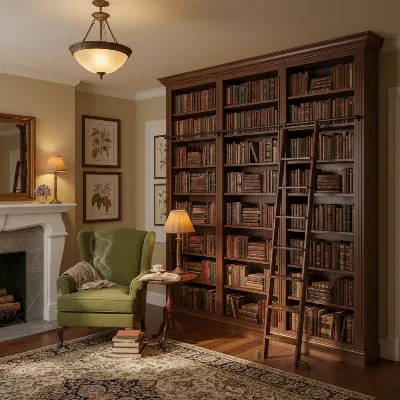 A tall, elegant freestanding solid wood bookshelf in a cozy home library
Corner Bookshelves
Corner bookshelves are ingeniously designed to utilize often-overlooked corner spaces, turning them into practical storage and display areas. They are perfect for optimizing small or awkward room layouts, effectively increasing storage capacity without cluttering the main walls.
These shelves can be freestanding or wall-mounted, and their triangular or L-shaped designs fit snugly into a 90-degree angle. They are particularly beneficial in living rooms, bedrooms, or studies where space is at a premium. By filling a corner, they help create a more cohesive and visually balanced room while providing a dedicated spot for books, plants, or decorative accents. When choosing a corner unit, ensure its dimensions are proportionate to your space to avoid overwhelming the room.
Comparing Solid Wood Bookshelves
To help you make an informed decision, here’s a detailed comparison of the most common types of solid wood bookshelves across various criteria.
Detailed Comparison Table
|
Our Picks for the Best Book Shelf in 2026
As an Amazon Associate I earn from qualifying purchases.
|
||
| Num | Product | Action |
|---|---|---|
| 1 | TVU 5-Tier Wooden Bookshelf, 65 Inch Tall Bookshelf with Storage, Floor Standing Modern Style Display Bookcase for Living Room, Office, Study Room, Entryway, Brown |

|
| 2 | Mavivegue Bookcase, 18-Cube Extra Large Book Shelf, DIY Cube Storage Organizer for Bedroom, Living Room, Home Office - Black |
|
| 3 | VASAGLE Bookshelf, Tree-Shaped Bookcase with 13 Storage Shelves, Rounded Corners, 9.8”D x 33.9”W x 55.1”H, Rustic Brown ULBC67BXV1 |
|
| 4 | VASAGLE CUSTOS Collection - Bookshelf, 5-Tier Bookcase, Book Shelf, Open Storage Shelf, 9.4 x 23.6 x 52.8 Inches, for Living Room, Home Office, Dinning Room, Cloud White ULBC165T14 |
|
| 5 | NUMENN Triple Column 5 Tier Bookshelf, Bookcase with 14 Open Display Shelves, Adjustable Rustic Industrial Style Book Shelves, Modern Bookshelves for Bedroom, Living Room and Home Office, Vintage |
|
| 6 | VASAGLE CUSTOS Collection - Bookshelf, 6-Tier Bookcase, Book Shelf, Open Storage Shelf, 9.4 x 23.6 x 63.3 Inches, for Living Room, Home Office, Dinning Room, Cloud White ULBC166T14 |
|
| 7 | DUMOS 5 Tiers Bookshelf, Classical Book Shelf, Tall Display Shelves in Living Room/Home/Office, Storage Organizer for CDs/Books/Movies, Modern Black |
|
| 8 | Furinno JAYA Book Shelf, 5-Tier Bookshelf, Bookcase with Adjustable Shelves, 9.5" x 24.5" x 71.2", for Organization and Storage, for Living Room, Bedroom, Home Office, Blackwood |
|
| 9 | NUMENN Bookshelf, 5 Tier Bookshelves, Home Office Bookcase Shelf Storage Organizer, Free Standing Storage Shelving Unit for Bedroom, Living Room and Home Office, Vintage |
|
| 10 | NUMENN 5 Tier Bookshelf, Tall Bookcase Shelf Storage Organizer, Modern Book Shelf for Bedroom, Living Room and Home Office, Vintage |
|
| Criteria | Freestanding Bookshelves | Wall-Mounted Bookshelves | Corner Bookshelves |
|---|---|---|---|
| Price | Moderate to High (due to size & material volume) | Low to Moderate (smaller, less material) | Moderate (specialized design, efficient use of space) |
| Durability | Very High (robust construction, heavy wood) | High (depends on wall anchors and material thickness) | High (often sturdy, designed for stability) |
| Aesthetics | Classic, substantial, can be a room’s focal point | Modern, minimalist, creates an open feel | Space-saving, cohesive, utilizes awkward corners |
| Weight Capacity | Very High (designed for heavy loads of books) | Moderate to High (crucial to check weight limits & installation) | High (supports weight well when properly secured) |
| Ease of Installation | Easy (assemble and place) | Moderate (requires drilling, anchoring, level) | Moderate (requires precise placement for corner fit) |
Solid Wood Bookshelf Buying Guide
Choosing the right solid wood bookshelf involves more than just picking a pretty design. It requires a thoughtful assessment of your needs, the available space, and the characteristics of different wood types.
Defining Your Needs
Before diving into styles and materials, consider the practical aspects. How many books do you need to store, and what are their sizes? A large collection of heavy hardcovers will require a sturdier, deeper shelf than a modest collection of paperbacks. Next, measure your space carefully. Account for both height and width, and consider traffic flow around the bookshelf. Finally, think about your existing interior design style. Do you need something rustic, modern, traditional, or industrial? The bookshelf should seamlessly integrate with your home’s aesthetic.
Choosing the Right Wood Material
The type of solid wood significantly impacts the bookshelf’s durability, appearance, and price.
- Hardwoods (Oak, Walnut, Cherry, Maple, Parawood): These are dense, durable woods known for their longevity and rich grain patterns.
- Oak: Known for its strength and prominent grain, available in red or white varieties. It’s highly durable and resists dents.
- Walnut: Prized for its dark, rich color and elegant grain. It’s very strong but can be more expensive.
- Cherry: Offers a beautiful reddish-brown hue that deepens over time. It’s fine-grained and durable.
- Maple: A very hard, light-colored wood with a subtle grain, offering excellent resistance to wear.
- Parawood (Rubberwood): An eco-friendly hardwood with a light to medium tone, known for its density and stability.
- Softwoods (Pine, Fir): These are generally lighter and less dense than hardwoods, making them more affordable.
- Pine: A popular choice for its affordability, distinctive knots, and rustic appeal. While it’s a softwood, well-constructed pine bookshelves can be very durable, though they might be more susceptible to dents than hardwoods.
- Fir: Another softwood that is relatively strong for its weight and offers a straight grain.
When selecting, consider the balance between desired aesthetics, expected durability, and your budget.
Selecting Style and Size
The dimensions and design of your bookshelf should match its intended function and the proportions of your room.
- Freestanding Bookshelves: Standard heights range from 3 to 7 feet, with widths varying widely. Consider shelves with adjustable heights to accommodate books of different sizes or to create space for decorative items.
- Wall-Mounted Bookshelves: These offer immense flexibility in length and arrangement. Plan the layout carefully to ensure balance and accessibility, considering the weight capacity per shelf.
- Corner Bookshelves: Measure the corner space accurately. L-shaped or wedge designs can maximize storage in these often-underutilized areas.
Always prioritize stability and ensure the shelves are deep enough to hold your largest books without them protruding excessively.
Budget and Brands
Solid wood bookshelves represent an investment, and prices can vary significantly based on wood type, craftsmanship, size, and brand reputation. Entry-level solid pine options might start in the low hundreds, while large, handcrafted hardwood pieces from premium brands can easily reach several thousands.
Look for brands known for quality construction, good joinery (like dovetail or mortise-and-tenon joints), and clear information about the wood source. Reading customer reviews can provide valuable insights into a product’s real-world performance and durability. To find good value, consider off-season sales, floor models, or reputable online retailers that specialize in solid wood furniture.
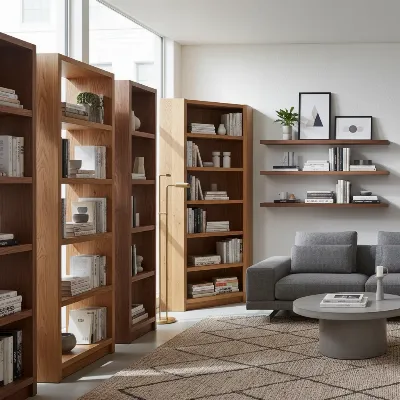 Various solid wood bookshelf styles in a modern living room setting
Top Picks: Recommended Solid Wood Bookshelves
While specific product availability can change, here are types of solid wood bookshelves that consistently receive high marks for quality, design, and functionality.
- The Classic Hardwood Tower: A tall, five-to-seven-shelf freestanding unit crafted from solid oak or walnut. These often feature adjustable shelves, sturdy backing, and traditional joinery, making them ideal for heavy book collections and a timeless aesthetic. Their robust build ensures they can support substantial weight without any sign of sagging.
- Minimalist Walnut Ladder Shelf: For a contemporary look, a ladder-style bookshelf with solid walnut rungs and shelves offers a sleek, open design. While not ideal for massive libraries due to varying shelf depths and open sides, it’s perfect for displaying a curated selection of books alongside plants or decorative objects, adding a touch of modern elegance.
- Rustic Pine Corner Unit: A charming and practical solution for smaller spaces, a solid pine corner bookshelf often features a natural, unfinished look or a light stain that highlights the wood’s grain. These units effectively maximize corner utility, providing ample storage with a cozy, rustic appeal. Look for versions with three to five shelves for versatile storage.
- Mid-Century Modern Cherry Bookcase: Characterized by clean lines, tapered legs, and rich cherry wood, these bookcases combine retro charm with modern functionality. Often featuring a mix of open shelving and closed cabinets, they offer versatile storage for books and other items while exuding sophistication.
“Investing in a solid wood bookshelf isn’t just about furniture; it’s about acquiring a piece of enduring craftsmanship that will age gracefully and adapt to your evolving style for decades to come.” – Alex Chen, Furniture Design Expert
Conclusion
Choosing the best solid wood bookshelf means making a commitment to quality, durability, and timeless style. By understanding the different types—freestanding, wall-mounted, and corner—and carefully considering factors like wood material, size, and your specific needs, you can select a piece that not only stores your literary treasures but also enhances the overall aesthetic of your room. A well-chosen solid wood bookshelf is more than just functional; it becomes a cherished element of your home, capable of elevating any space with its natural beauty and robust presence. Which type of solid wood bookshelf will be the perfect centerpiece for your personal library?
Frequently Asked Questions
How much weight can a solid wood bookshelf hold?
The weight capacity of a solid wood bookshelf varies significantly depending on the thickness of the shelves, the type of wood, and the construction method. Generally, a well-built solid hardwood shelf (like oak or maple) 1 inch thick can hold over 100 pounds per linear foot without noticeable sag, making them highly suitable for heavy book collections. Always check the manufacturer’s specific load recommendations.
What is the best wood for a bookshelf?
The “best” wood depends on your priorities. For ultimate durability and resistance to warping and sagging, hardwoods like oak, walnut, or maple are excellent choices. If budget is a primary concern and you appreciate a rustic aesthetic, pine is a very popular and sturdy softwood option, though it may be more prone to dents than hardwoods.
How do I prevent a solid wood bookshelf from sagging?
To prevent sagging, ensure your bookshelf is made of sufficiently thick, high-quality solid wood, ideally with adjustable shelves for better weight distribution. Avoid overloading shelves, and place heavier items closer to the vertical supports or on lower shelves. Proper assembly and using wall anchors for taller units also contribute to overall stability and sag prevention.
Are solid wood bookshelves worth the investment?
Absolutely. Solid wood bookshelves are a worthwhile investment due to their superior durability, longevity, and timeless aesthetic appeal. Unlike engineered wood products, solid wood can be refinished and repaired, allowing it to last for generations. Their natural beauty and robust construction make them a valuable addition that enhances any room.
What’s the difference between a bookcase and a bookshelf?
Often used interchangeably, “bookcase” typically refers to the entire furniture unit, while “bookshelf” refers to the individual shelves within that unit. So, a bookcase is a piece of furniture containing several bookshelves. Functionally, they serve the same purpose of storing and displaying books, with the terms broadly describing the same item.

I’ve been looking for a robust storage solution for my growing book collection, and the emphasis on longevity in solid wood really resonated with me. I ended up getting a beautiful oak piece. It was a bit pricier than I initially planned, but the quality is undeniable. It truly elevates the space and feels incredibly solid.
I was on the fence about spending more on solid wood versus engineered wood, but the explanation about lasting for generations convinced me. My new bookshelf is a stunning addition to my home office. It holds all my heavy textbooks without any bowing, which was a huge problem with my previous shelf. So glad I made the switch!
I recently invested in a freestanding solid wood bookshelf after reading about the different types. The guide really helped me understand why solid wood is such a great choice for durability. It’s so much sturdier than my old particle board shelf and looks absolutely beautiful in my living room. Definitely worth the investment for something that will last generations.
I appreciate the breakdown of solid wood bookshelves, especially the point about natural beauty deepening with age. I purchased one of the recommended types, and while it’s very sturdy, the finish was a little darker than I expected from the online photos. It’s a minor complaint, but something to be aware of if you’re particular about wood tones. Still a good quality piece overall.