A wobbly bookshelf can be quickly fixed at home by tightening loose fasteners, shimming uneven legs, or anchoring the unit to a wall. These methods address common causes such as uneven flooring, loose joints, or inadequate structural support, ensuring the bookshelf stands firm and secure. Stabilizing a bookshelf is a straightforward DIY project that enhances safety and protects valuable items.
Common Causes of a Wobbly Bookshelf
Before you can effectively fix a wobbly bookshelf, understanding why it’s unstable is crucial. Instability can stem from various sources, ranging from simple environmental factors to structural weaknesses within the unit itself.
One of the most frequent culprits is uneven flooring. Floors are rarely perfectly flat, and even a slight slope can cause a bookshelf to rock, preventing it from sitting level. This issue is particularly noticeable on carpeted surfaces, where uneven padding or perimeter carpet tack strips can create height discrepancies that destabilize tall shelves. Another common floor-related problem is a leg that is too short or has a missing protective pad, leading to an immediate tilt.
Beyond the floor, structural issues within the bookshelf itself often play a significant role. Loose joints, warped materials, or poor initial construction are widespread causes. Over time, the constant shifting of weight, or repeated moves, can weaken the connections, causing screws to loosen or dowels to come undone. This often manifests as the entire unit leaning or swaying.
Furthermore, improper weight distribution can contribute to wobbling. Stacking heavier books on the top shelves or concentrating too much weight in the center of shelves can cause them to sag, deforming the overall structure and leading to instability. Even the flimsy cardboard back panels often found in flat-pack furniture can contribute to instability if not properly secured, as they offer little lateral support. Lastly, sometimes a bookshelf might be inadvertently placed on top of a floor vent or grate, which certainly disrupts its balance.
Quick Fixes for a Wobbly Bookshelf
Fortunately, many wobbly bookshelf issues can be resolved with simple, immediate solutions. These quick fixes often require minimal tools and can restore stability to your unit without extensive effort.
Tightening Screws and Fasteners
The first step in addressing a wobbly bookshelf should always be to inspect and tighten all visible screws and fasteners. Over time, vibrations and shifting weight can cause these connections to loosen. Using a screwdriver, carefully tighten every screw, cam lock, and bolt you can find. If you encounter stripped screw holes, a common issue in particle board furniture, you can apply a thin layer of CA (cyanoacrylate) glue, also known as super glue, into the hole before reinserting the screw. For dowel joints that have come loose, remove the dowel, apply wood glue into the hole, insert the dowel, and reassemble, allowing ample time for the glue to dry. This simple action can often dramatically improve stability by firming up the unit’s frame.
Adding Corner Braces
|
Our Picks for the Best Book Shelf in 2026
As an Amazon Associate I earn from qualifying purchases.
|
||
| Num | Product | Action |
|---|---|---|
| 1 | VASAGLE CUSTOS Collection - Bookshelf, 6-Tier Bookcase, Book Shelf, Open Storage Shelf, 9.4 x 23.6 x 63.3 Inches, for Living Room, Home Office, Dinning Room, Cloud White ULBC166T14 |

|
| 2 | VASAGLE CUSTOS Collection - Bookshelf, 5-Tier Bookcase, Book Shelf, Open Storage Shelf, 9.4 x 23.6 x 52.8 Inches, for Living Room, Home Office, Dinning Room, Cloud White ULBC165T14 |
|
| 3 | VASAGLE Bookshelf, Tree-Shaped Bookcase with 13 Storage Shelves, Rounded Corners, 9.8”D x 33.9”W x 55.1”H, Rustic Brown ULBC67BXV1 |
|
| 4 | DUMOS 5 Tiers Bookshelf, Classical Book Shelf, Tall Display Shelves in Living Room/Home/Office, Storage Organizer for CDs/Books/Movies, Modern Black |
|
| 5 | NUMENN Triple Column 5 Tier Bookshelf, Bookcase with 14 Open Display Shelves, Adjustable Rustic Industrial Style Book Shelves, Modern Bookshelves for Bedroom, Living Room and Home Office, Vintage |
|
| 6 | TVU 5-Tier Wooden Bookshelf, 65 Inch Tall Bookshelf with Storage, Floor Standing Modern Style Display Bookcase for Living Room, Office, Study Room, Entryway, Brown |
|
| 7 | Furinno JAYA Book Shelf, 5-Tier Bookshelf, Bookcase with Adjustable Shelves, 9.5" x 24.5" x 71.2", for Organization and Storage, for Living Room, Bedroom, Home Office, Blackwood |
|
| 8 | NUMENN 5 Tier Bookshelf, Tall Bookcase Shelf Storage Organizer, Modern Book Shelf for Bedroom, Living Room and Home Office, Vintage |
|
| 9 | Mavivegue Bookcase, 18-Cube Extra Large Book Shelf, DIY Cube Storage Organizer for Bedroom, Living Room, Home Office - Black |
|
| 10 | NUMENN Bookshelf, 5 Tier Bookshelves, Home Office Bookcase Shelf Storage Organizer, Free Standing Storage Shelving Unit for Bedroom, Living Room and Home Office, Vintage |
|
For bookshelves that continue to feel unstable even after tightening, adding corner braces can provide crucial additional support. These L-shaped metal brackets can be installed at the internal corners where the side panels meet the top, bottom, and even the shelves. They work by creating a rigid connection, preventing the bookshelf from racking side-to-side. You can attach them discreetly on the inside of the unit or, for maximum stability, on the backside where they won’t be visible. Ensure you use screws appropriate for your bookshelf’s material; for particle board, consider using bolts with nuts for a more secure grip, rather than just screws which may strip easily.
Shimming Uneven Legs
If your bookshelf’s wobble stems from uneven flooring, shimming the uneven legs is a fast and effective solution. Begin by using a spirit level placed on top of the bookshelf to identify the lowest corner or side. Once identified, carefully lift the bookshelf slightly and insert furniture wedges or shims under the shorter leg(s) until the unit is level. Hard plastic shims are ideal for carpeted surfaces as they provide firm stability without compressing into the pile. For hard floors like wood or tile, soft plastic shims are preferred to protect the floor and the bookshelf’s finish. You can stack thin shims to achieve the exact height needed, as many brands feature interlocking ridges to prevent slipping. Avoid using improvised materials like cardboard or paper, as these can compress, rot, or slip over time, leading to recurring instability.
Using Wall Anchors
Regardless of how sturdy your bookshelf feels, anchoring it to the wall is a critical safety measure, especially for tall units or in homes with children. Wall anchors prevent the bookshelf from tipping forward, a common hazard that can lead to severe injury.
To install wall anchors, first, use a stud finder to locate the wall studs (the vertical wooden beams behind your drywall) where you plan to secure the bookshelf. Mark these locations with a pencil. Most anchor kits come with straps or L-brackets. Attach one end of the strap or bracket to a sturdy part of the bookshelf’s frame near the top, ensuring it’s screwed into solid wood and not just the flimsy back panel. Then, drill pilot holes into the marked stud locations on your wall. If studs are unavailable, use appropriate heavy-duty wall anchors or toggle bolts designed for drywall. Finally, connect the other end of the strap or bracket to the wall. Ensure all connections are tight, and periodically check them to ensure they remain secure.
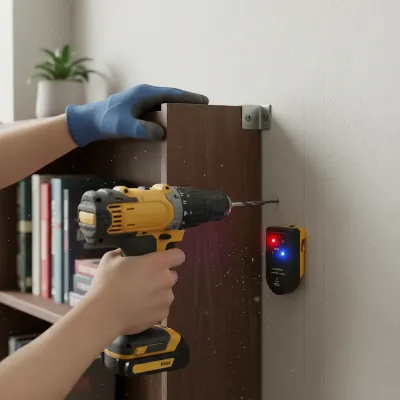 A person installing L-shaped metal brackets to secure a tall wooden bookshelf to a drywall with stud finder and drill.
Advanced Solutions for Persistent Wobbles
Sometimes, quick fixes aren’t enough, and a persistent wobble calls for more robust, long-term solutions. These advanced techniques address deeper structural issues, transforming a flimsy unit into a truly stable piece of furniture.
Reinforcing Back Panels
Many mass-produced bookshelves, particularly flat-pack models, come with thin cardboard or fiberboard backings that offer minimal structural support. Reinforcing the back panel can significantly improve the unit’s rigidity and prevent side-to-side racking. The most effective method is to replace the flimsy backing with a sturdier material, such as a sheet of thin plywood or prefinished wood paneling.
First, carefully remove the existing back panel and any nails or staples. Lay the bookshelf face down on a flat surface and ensure it is perfectly square. Measure and cut the new plywood or paneling to fit precisely. Attach the new back panel to the bookshelf frame using wood glue and longer, appropriate-sized screws or nails, ensuring you fasten it securely around all edges – top, bottom, and both sides. If working with laminated particle board, a strong construction adhesive like Loctite PowerLock can provide a superior bond to standard wood glue. This creates a solid, rigid structure that dramatically reduces wobble.
Adding Cross Braces (X-Braces)
For open-backed bookshelves or units where the side-to-side sway is particularly pronounced, adding cross braces (X-braces) to the back can be highly effective. These diagonal supports work by triangulating the frame, preventing it from deforming into a parallelogram.
One simple and inexpensive method is to use heavy-duty paracord or strong wire. Staple one end of the paracord to an upper corner of the bookshelf’s back frame. Pull the cord tightly to the opposite bottom corner and staple it securely. Repeat this process for the other diagonal, creating an “X” pattern. Ensure the cords are pulled taut for maximum effect. For a more robust solution, you can cut thin strips of wood or metal and screw them diagonally across the back corners of the bookshelf, forming a rigid X. This method provides superior structural integrity and is often used in industrial shelving.
Replacing Damaged Hardware
If, upon inspection, you discover damaged or broken hardware, such as bent shelf pins, stripped cam locks, or cracked brackets, replacing these components is essential. Sometimes, the original hardware was simply insufficient for the weight or stress placed upon the bookshelf. Upgrade to stronger, higher-quality hardware, such as robust metal L-brackets for corner connections or sturdier shelf pins. When dealing with stripped screw holes, applying wood glue or CA glue with toothpicks to fill the hole before re-drilling and inserting a new, slightly larger screw can create a secure new connection point. This attention to detail can prevent recurring wobbles and extend the life of your furniture.
Preventative Measures to Avoid Wobbling
An ounce of prevention is worth a pound of cure, especially when it comes to keeping your bookshelves stable and safe. Implementing these preventative measures can help you avoid future wobbles and maintain the integrity of your units.
Firstly, proper weight distribution is key. Always place your heaviest items, such as large hardback books or encyclopedias, on the lowest shelves. This lowers the bookshelf’s center of gravity, making the entire unit more stable and less prone to tipping. Arrange medium-weight items in the middle and lighter items on the top shelves. Distribute the weight evenly from left to right across each shelf to prevent bowing and unbalanced stress on the frame.
Regularly check for loose joints and fasteners. Make it a habit to periodically inspect your bookshelf for any signs of loosening screws or components. A quick tighten can prevent a minor issue from escalating into a major wobble. Avoid dragging your bookshelf across the floor when moving it, as this can severely stress and damage the joints. Always empty the unit completely and lift it with assistance.
When assembling new furniture, pay close attention to the instructions and ensure all parts are correctly and securely joined. Use wood glue on dowels and joints where appropriate to create stronger, more permanent connections. Finally, to always secure tall bookshelves to the wall using anti-tip kits or L-brackets. This is the single most important preventative measure against tip-over accidents.
 A neatly organized wooden bookshelf with heavier, larger books on the bottom shelves and lighter, smaller items on the top shelves.
Tools and Materials You’ll Need
Having the right tools and materials on hand will make the task of fixing a wobbly bookshelf much smoother and more efficient. Here’s a list of essentials:
- Spirit Level: Crucial for identifying uneven surfaces and ensuring your bookshelf is perfectly plumb.
- Stud Finder: Essential for locating wall studs if you plan to anchor your bookshelf for safety.
- Power Drill and Screwdriver Set: For tightening existing fasteners, drilling pilot holes, and installing new hardware.
- Assorted Screws: Wood screws of various lengths, especially longer ones for reinforcement, and screws appropriate for wall anchors.
- Wall Anchors: Heavy-duty drywall anchors, toggle bolts, or plastic anchors, chosen based on your wall type and the weight of your bookshelf.
- Furniture Wedges/Shims: A variety pack with both hard plastic (for carpet) and soft plastic (for hard floors) is recommended.
- L-Brackets/Corner Braces: Small metal brackets for reinforcing internal corners.
- Wood Glue, CA Glue, or Construction Adhesive: For strengthening joints, filling stripped screw holes, or securing new back panels.
- Plywood or Wood Paneling: If you plan to replace a flimsy back panel.
- Paracord or Strong Wire: For creating simple X-braces.
- Tape Measure and Pencil: For accurate measurements and markings.
- Hammer: For gently tapping in shims or wall anchors.
- Safety Gear: Gloves and safety glasses are always a good idea when working with tools.
Step-by-Step Guide: Fixing a Wobbly Bookshelf
Follow these steps to systematically diagnose and fix your wobbly bookshelf:
Step 1: Empty and Inspect the BookshelfBegin by completely emptying your bookshelf of all books and decorative items. This reduces weight and allows for thorough inspection. Place the bookshelf in its usual spot and gently push on different corners to observe the direction and nature of the wobble.
Step 2: Identify the Root CausePlace a spirit level on the top of the bookshelf, then across each shelf, and finally on the floor where the bookshelf stands. Note any unevenness. Check all joints for looseness, stripped screws, or visible damage. Examine the back panel for flimsiness or detachment. This diagnosis will guide your repair strategy.
Step 3: Tighten All FastenersUsing a screwdriver or drill, systematically tighten every screw, bolt, and cam lock on the bookshelf. If any holes are stripped, use CA glue with toothpicks to create a new, solid base for the screw, or replace the screw with a slightly larger one.
Step 4: Shim Uneven Legs/BaseIf the floor is uneven, gently lift the bookshelf at the lowest point and insert appropriate furniture shims (hard plastic for carpet, soft for hard floors) until the unit is level and stable. Use a spirit level to confirm. Trim any excess shim material.
Step 5: Reinforce the Back Panel (If Needed)If the back panel is flimsy cardboard, consider replacing it with a sturdy piece of plywood or wood paneling. Lay the bookshelf face down, ensure it’s square, and secure the new backing with wood glue and screws or nails around all edges. Alternatively, for a quicker fix, add paracord X-braces to the back.
Step 6: Add Corner BracesFor added rigidity, install L-shaped metal brackets at the internal corners of the bookshelf’s frame. Screw them into sturdy wood sections to prevent racking.
Step 7: Install Wall Anchors for SafetyThis step is critical for tall bookshelves. Use a stud finder to locate wall studs. Attach anti-tip straps or L-brackets to the top rear of your bookshelf, screwing into solid wood. Then, secure the other end to the wall studs using appropriate screws or heavy-duty wall anchors if studs are unavailable. Ensure the connection is taut and secure.
Step 8: Re-load ProperlyOnce your bookshelf is stable, reload it by placing the heaviest items on the bottom shelves to lower the center of gravity. Distribute weight evenly across each shelf to prevent future sagging or wobbling.
Conclusion
A wobbly bookshelf is more than just an aesthetic issue; it’s a safety concern that can be easily addressed with a few DIY techniques. By systematically identifying the common causes—from uneven floors and loose joints to flimsy back panels and improper weight distribution—you can apply the right solution. Whether it’s a quick shim, a thorough tightening of fasteners, adding robust cross braces, or the essential step of anchoring to the wall, each action contributes to a more secure and stable storage solution. Don’t let your literary treasures (or your peace of mind) be at risk. Take the proactive steps outlined in this guide to improve your shaky shelf into a steadfast sanctuary for your books. Isn’t it time your bookshelf stood as firm and reliable as the stories it holds?
Frequently Asked Questions
Why do bookshelves tend to get wobbly over time?
Bookshelves often become wobbly due to factors like uneven flooring, loose joints from repeated movement or shifting weight, flimsy back panels that lack structural support, or improper weight distribution where heavy items are placed too high or in the center of shelves.
What is the quickest fix for a slight wobble in a bookshelf?
The quickest fix for a slight wobble is often to use furniture shims. Identify the lowest corner or leg using a spirit level and carefully insert hard plastic shims on carpet or soft plastic shims on hard floors until the bookshelf is level and stable.
How important is anchoring a bookshelf to the wall for stability?
Anchoring a bookshelf to the wall is extremely important, especially for tall units. It is a critical safety measure that prevents the bookshelf from tipping over, protecting people (especially children) and property from potential injury or damage.
Can a sagging bookshelf shelf be fixed, or does it need to be replaced?
A sagging bookshelf shelf can often be fixed. You can try flipping the shelf upside down to allow it to gradually flatten over time, or add additional shelf supports like metal brackets underneath to redistribute the weight and prevent further bowing.
What kind of shims should be used for different floor types?
For carpeted floors, hard plastic shims are recommended as they provide firm stability without compressing into the carpet pile. For hard floors like wood or tile, soft plastic shims are ideal as they protect the floor and the bookshelf’s finish while providing stability.
Frequently Asked Questions
Why do bookshelves tend to get wobbly over time?
Bookshelves often become wobbly due to factors like uneven flooring, loose joints from repeated movement or shifting weight, flimsy back panels that lack structural support, or improper weight distribution where heavy items are placed too high or in the center of shelves. These issues can cause the unit to lean or sway, compromising its stability.
What is the quickest fix for a slight wobble in a bookshelf?
The quickest fix for a slight wobble is often to use furniture shims. Identify the lowest corner or leg using a spirit level and carefully insert hard plastic shims on carpet or soft plastic shims on hard floors until the bookshelf is level and stable. Many brands feature interlocking ridges to prevent slipping.
How important is anchoring a bookshelf to the wall for stability?
Anchoring a bookshelf to the wall is extremely important, especially for tall units or in homes with children. It is a critical safety measure that prevents the bookshelf from tipping over, protecting people and property from potential injury or damage. This is the single most important preventative measure against tip-over accidents.
Can a sagging bookshelf shelf be fixed, or does it need to be replaced?
A sagging bookshelf shelf can often be fixed without replacement. You can try flipping the shelf upside down to allow it to gradually flatten over time, or add additional shelf supports like metal brackets underneath to redistribute the weight and prevent further bowing. Ensure weight is distributed evenly across the shelf.
What kind of shims should be used for different floor types?
For carpeted floors, hard plastic shims are recommended as they provide firm stability without compressing into the carpet pile. For hard floors like wood or tile, soft plastic shims are ideal as they protect the floor and the bookshelf's finish while providing stability. Avoid using improvised materials like cardboard or paper.
What tools are essential for fixing a wobbly bookshelf?
Essential tools for fixing a wobbly bookshelf include a spirit level for identifying unevenness, a stud finder for wall anchoring, a screwdriver set for tightening fasteners, and furniture wedges or shims. Additionally, wood glue, L-brackets, and wall anchors are often needed for more robust repairs.
Fix a Wobbly Bookshelf
This guide provides step-by-step instructions to diagnose and fix a wobbly bookshelf, ensuring it is stable and safe.
Completely empty the bookshelf of all items to reduce weight and allow for thorough inspection. Gently push on different corners to observe the direction and nature of the wobble, which helps in diagnosing the problem.
Use a spirit level on the top, across each shelf, and on the floor to check for unevenness. Examine all joints for looseness, stripped screws, or visible damage, and check the back panel for flimsiness. This diagnosis will guide your repair strategy.
Systematically tighten every screw, bolt, and cam lock on the bookshelf using a screwdriver or drill. If any holes are stripped, use CA glue with toothpicks to create a new, solid base for the screw, or replace the screw with a slightly larger one for a secure connection.
If the floor is uneven, gently lift the bookshelf at its lowest point and insert appropriate furniture shims (hard plastic for carpet, soft for hard floors) until the unit is level and stable. Confirm with a spirit level and trim any excess shim material.
For tall bookshelves, use a stud finder to locate wall studs. Attach anti-tip straps or L-brackets to the top rear of your bookshelf, screwing into solid wood, then secure the other end to the wall studs using appropriate screws or heavy-duty wall anchors. Ensure the connection is taut and secure.

The tips for shimming uneven legs were helpful, and it did improve the stability of my old IKEA unit. However, I found that on my thick carpet, it still has a slight give. I think I might need to try anchoring it to the wall as a next step, which I was hoping to avoid. Good starting points though.
I had a bookshelf in my living room that was driving me crazy with its wobbling every time I walked by. Following the advice here about tightening loose fasteners made a huge difference! It’s amazing how much more stable it feels now, and I didn’t even need any special tools. Definitely a quick and effective fix.
This was exactly what I needed! My vintage wooden bookshelf was really unstable, and I was worried about it toppling over. The advice on addressing inadequate structural support by reinforcing the joints was brilliant. It took a little more effort than just tightening screws, but the result is a rock-solid bookshelf that looks great and is safe.
My tall bookshelf in the office was always a bit shaky, especially when I added more books. I tried the suggestion of checking for uneven flooring and realized that was exactly the problem. A few small shims under one leg, and it’s much more secure. I feel a lot safer having my heavier books on it now.