Anchoring a heavy bookshelf securely to the wall is crucial for safety, preventing tip-overs that can cause serious injury or damage, especially in homes with children or during seismic activity. The most effective method involves attaching the bookshelf directly into wall studs using robust screws or specialized heavy-duty anchors, ensuring the unit remains stable even when fully loaded. This guide details the essential steps, tools, and techniques for safely securing substantial shelving units.
Understanding Bookshelf Stability and Why Anchoring is Essential
Even robust bookshelves can become unstable when loaded with heavy items, posing a serious safety risk. Children are particularly vulnerable, often viewing shelves as a ladder, which can shift the center of gravity and lead to dangerous tip-overs. Unanchored furniture is also a hazard during natural events like earthquakes. While a bookshelf might appear sturdy, its weight alone isn’t enough to guarantee stability against horizontal forces or downward pulls. Anchoring ensures your heavy unit remains firmly in place, protecting both your valuable collection and, more importantly, the people in your home.
The “Ladder Effect” and Tip-Over Risks
The “Ladder Effect” describes how a child might pull on a drawer or climb a shelf, shifting the center of gravity forward and making the unit prone to tipping. This phenomenon highlights why anchoring any bookshelf over 30 inches tall, or one that will carry a substantial load, is critical. Even heavy solid wood bookcases can pivot and fall without an anti-tip kit.
Weight Distribution and Overloading
Every bookshelf has a structural limit to the weight it can safely carry without sagging or collapsing. Overloading can damage shelves, weaken joints, and increase the likelihood of tipping. As a general rule, a single wall stud can support up to 50 pounds; a shelf anchored to two studs can hold up to 100 pounds. For standard solid wood or quality plywood, 25-50 pounds per shelf is a reasonable target, while particle board shelves have much lower limits. Always place heavier items toward the back and on the bottom shelves to lower the center of gravity and distribute weight evenly. Avoid stacking heavy items on top of the bookshelf.
Preparing for Installation: Essential Tools and Safety Measures
Before anchoring your heavy bookshelf, gather all necessary tools and take important safety precautions. Removing all items from the bookshelf is the crucial first step, ensuring it is light and easy to maneuver. Clearing the area around the bookshelf also creates a safe working environment.
Tools You’ll Need
|
Our Picks for the Best Book Shelf in 2026
As an Amazon Associate I earn from qualifying purchases.
|
||
| Num | Product | Action |
|---|---|---|
| 1 | VASAGLE Bookshelf, Tree-Shaped Bookcase with 13 Storage Shelves, Rounded Corners, 9.8”D x 33.9”W x 55.1”H, Rustic Brown ULBC67BXV1 |

|
| 2 | NUMENN Triple Column 5 Tier Bookshelf, Bookcase with 14 Open Display Shelves, Adjustable Rustic Industrial Style Book Shelves, Modern Bookshelves for Bedroom, Living Room and Home Office, Vintage |
|
| 3 | Mavivegue Bookcase, 18-Cube Extra Large Book Shelf, DIY Cube Storage Organizer for Bedroom, Living Room, Home Office - Black |
|
| 4 | NUMENN 5 Tier Bookshelf, Tall Bookcase Shelf Storage Organizer, Modern Book Shelf for Bedroom, Living Room and Home Office, Vintage |
|
| 5 | TVU 5-Tier Wooden Bookshelf, 65 Inch Tall Bookshelf with Storage, Floor Standing Modern Style Display Bookcase for Living Room, Office, Study Room, Entryway, Brown |
|
| 6 | Furinno JAYA Book Shelf, 5-Tier Bookshelf, Bookcase with Adjustable Shelves, 9.5" x 24.5" x 71.2", for Organization and Storage, for Living Room, Bedroom, Home Office, Blackwood |
|
| 7 | VASAGLE CUSTOS Collection - Bookshelf, 6-Tier Bookcase, Book Shelf, Open Storage Shelf, 9.4 x 23.6 x 63.3 Inches, for Living Room, Home Office, Dinning Room, Cloud White ULBC166T14 |
|
| 8 | DUMOS 5 Tiers Bookshelf, Classical Book Shelf, Tall Display Shelves in Living Room/Home/Office, Storage Organizer for CDs/Books/Movies, Modern Black |
|
| 9 | VASAGLE CUSTOS Collection - Bookshelf, 5-Tier Bookcase, Book Shelf, Open Storage Shelf, 9.4 x 23.6 x 52.8 Inches, for Living Room, Home Office, Dinning Room, Cloud White ULBC165T14 |
|
| 10 | NUMENN Bookshelf, 5 Tier Bookshelves, Home Office Bookcase Shelf Storage Organizer, Free Standing Storage Shelving Unit for Bedroom, Living Room and Home Office, Vintage |
|
- Stud finder
- Pencil or marker
- Drill and drill bits (appropriate for pilot holes and anchor size)
- Screwdriver (manual or electric, depending on screws)
- Level
- Measuring tape
- Safety glasses
- Bookshelf anchoring kit (straps, L-brackets, or heavy-duty wall anchors)
- (Optional) Helper for larger bookshelves
Safety First
Always wear safety glasses to protect your eyes from debris. If the bookshelf is particularly large or heavy, enlist a second pair of hands to help with positioning and lifting to prevent injury. Ensure the area is well-lit and free of obstacles.
Step-by-Step Guide to Anchoring Your Heavy Bookshelf
Anchoring a heavy bookshelf securely involves a series of precise steps, with the ultimate goal of attaching the unit to the strongest part of your wall: the studs.
Step 1: Empty and Position the Bookshelf
Completely remove all books and items from the bookshelf. Carefully move the empty bookshelf into its final desired position against the wall.
Step 2: Locate Wall Studs
Using a stud finder, locate the wooden studs behind your drywall where the bookshelf will sit. Studs are typically spaced 16 or 24 inches apart. Mark the edges of the studs with a pencil. Aim to anchor the bookshelf into at least two studs for maximum stability, especially for wider units. If you have an older home or can’t rely on a stud finder, try measuring from a corner or an electrical outlet (studs are usually next to these) and perform the “knock test” – listening for a solid thud instead of a hollow sound.
Step 3: Determine Anchor Height and Mark Attachment Points
Mark the anchor height on the back of the bookshelf, ideally near the top rear. A higher strap placement provides a stronger resisting moment against tipping. Transfer these marks to the wall, aligning them with the center of your located studs. If using L-brackets, mark where the bracket will attach to both the top/side of the bookshelf and the wall.
Step 4: Drill Pilot Holes
Using a drill bit slightly smaller than your anchor screws, drill pilot holes through the back panel of the bookshelf at your marked points. Then, drill pilot holes into the wall at the marked stud locations. Ensure the holes are deep enough for the screws to fully engage.
Step 5: Attach Anchoring Hardware to Bookshelf
If your anchoring system involves a bracket or strap, attach one end securely to the bookshelf using screws that penetrate into solid wood, not just the thin backing material.
Step 6: Install Wall Anchors (If Not Using Studs)
If you cannot align your bookshelf with studs, or if additional anchoring points are needed into drywall: Use heavy-duty anchors designed for drywall, such as expansion anchors or toggle bolts. These can hold significantly more weight than standard drywall screws (which are not recommended for heavy items). Drill a hole in the drywall according to the anchor manufacturer’s instructions, then insert the anchor.
Step 7: Connect Bookshelf to Wall
Carefully slide the bookshelf back against the wall, aligning the pre-drilled holes or attached hardware with the wall anchors or pilot holes in the studs. Use the provided screws to firmly attach the anchoring hardware (straps, L-brackets, etc.) to the wall. For straps, ensure all slack is removed so the bookshelf cannot move forward significantly.
Step 8: Final Check and Test Stability
Once everything is tightened, use a level to ensure the bookshelf is balanced. Gently attempt to pull or lean the bookshelf forward. It should remain firmly in place without any wobble. This test confirms that your anchoring is secure.
 A person locating wall studs with a stud finder to anchor a heavy bookshelf safely
Advanced Anchoring Techniques for Maximum Security
For exceptionally heavy bookshelves, or in situations where traditional stud placement is problematic, more robust anchoring methods are available.
Blocking Between Studs
This is the most secure method but requires opening up the wall. “Blocking” involves inserting a sheet of plywood or solid wood between the studs to create an extremely sturdy surface. This is ideal for mounting very heavy items like cabinets and provides unparalleled support for your bookshelf. While invasive, it offers the strongest possible anchor point.
Mounting to a Wood Strip Over Drywall
If opening the wall is not an option, consider attaching a wooden strip horizontally over the drywall. This strip must be secured directly into the wall studs. Once the wood strip is in place, you can then attach your bookshelf’s anchoring hardware to this robust wooden foundation. This method not only adds strength but also offers aesthetic flexibility, as the strip can be painted or stained to match your decor.
Masonry Anchors for Concrete or Brick Walls
For walls made of concrete or masonry, you will need specialized masonry anchors, such as expansion bolts or sleeve anchors. These are designed to expand within the drilled hole, creating a strong hold in solid materials. Do not attempt to use drywall anchors in these types of walls.
Alternative Methods (and Why Screws are Best)
While screw-based anchoring into studs or with heavy-duty anchors is the most recommended method for heavy bookshelves, some non-screw options exist for lighter applications or temporary needs.
Anti-Tip Kits (Straps)
Many bookshelves come with anti-tip kits, which typically include nylon or metal straps. These are simple to install, attaching one end to the bookshelf and the other to the wall. They are effective at preventing forward tipping but rely on the integrity of the wall attachment.
Adhesive Tape and Velcro (Not for Heavy Bookshelves)
Heavy-duty adhesive tape or Velcro strips can offer a temporary solution for very lightweight shelving or to prevent minor movement. However, for genuinely heavy bookshelves, especially those filled with books, these methods are not strong enough to prevent a dangerous tip-over and should be avoided. They lack the shear strength and load capacity required for substantial weight.
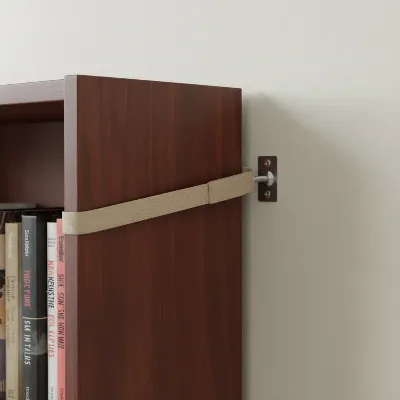 An anti-tip strap securing a heavy bookshelf to a wall stud
Maintaining Bookshelf Safety
Anchoring your bookshelf is a critical first step, but ongoing maintenance and mindful usage ensure long-term safety. Regularly check your anchoring system for any signs of loosening, wear, or damage. Over time, vibrations or shifts can slightly loosen screws, so periodic tightening is advisable. If you notice any wobbling or instability, address it immediately by re-tightening or replacing components.
Regular Checks
- Inspect Anchors: Periodically check the screws and anchors for tightness.
- Examine Straps/Brackets: Look for fraying on straps or bending in L-brackets.
- Assess Bookshelf Integrity: Ensure the bookshelf itself isn’t showing signs of structural weakness like bowing shelves or loose joints.
Responsible Loading
Remember to maintain proper weight distribution: heavier books and items on lower shelves and towards the back. Avoid placing top-heavy decorations or a stack of heavy items on the very top of an already tall bookshelf. By combining proper anchoring with smart loading practices, you create a truly safe and stable environment for your cherished collection.
Conclusion
Anchoring a heavy bookshelf to the wall is an essential step for both safety and peace of mind. By following a methodical approach—from locating studs and choosing the right anchors to properly installing the hardware and performing a final stability check—you can transform a potential hazard into a secure and reliable fixture in your home. Whether you opt for robust screws into wall studs, heavy-duty drywall anchors, or advanced blocking techniques, the goal remains the same: to protect your valuable possessions and, more importantly, your loved ones from accidental tip-overs. Don’t leave the stability of your heavy bookshelf to chance; anchor it safely and enjoy your literary sanctuary with confidence.
What other safety measures do you consider crucial for furniture in your home?
Frequently Asked Questions
Can I anchor a heavy bookshelf into just drywall?
While possible with specialized heavy-duty drywall anchors like toggle bolts or expansion anchors, it is always recommended to anchor into wall studs whenever feasible for maximum strength and safety. Standard drywall screws are insufficient for heavy bookshelves.
How often should I check my bookshelf anchors?
It’s a good practice to check your bookshelf anchors for tightness and any signs of wear every 6-12 months, or immediately if you notice any wobbling or instability.
What kind of screws should I use for anchoring into wood studs?
For anchoring into wood studs, use robust wood screws or lag screws that are long enough to penetrate deep into the stud, typically 2-3 inches, to ensure a strong hold. Ensure they are compatible with your chosen anchoring hardware.
Is it necessary to anchor every bookshelf?
It is strongly recommended to anchor any bookshelf over 30 inches tall, or any unit that will carry a significant amount of weight, especially in homes with children or pets.
Can I use adhesive alone to secure a heavy bookshelf?
No, adhesive alone is generally not strong enough to securely anchor a heavy bookshelf and prevent tipping. It may offer minimal resistance to minor movement but is insufficient for preventing a dangerous tip-over. Always use mechanical fasteners like screws and anchors for heavy furniture.
Frequently Asked Questions
Can a heavy bookshelf be anchored securely into just drywall?
While it is possible to anchor a heavy bookshelf into drywall using specialized heavy-duty anchors like toggle bolts or expansion anchors, it is always recommended to anchor into wall studs for maximum strength and safety. Standard drywall screws are not sufficient for heavy bookshelves.
How frequently should I inspect my bookshelf's anchoring system?
It is good practice to check your bookshelf anchors for tightness and any signs of wear every 6-12 months. You should also inspect them immediately if you notice any wobbling or instability in the unit.
What type of screws are best for anchoring into wooden wall studs?
For anchoring into wooden wall studs, use robust wood screws or lag screws that are typically 2-3 inches long. These screws should be long enough to penetrate deep into the stud, ensuring a strong and secure hold, and must be compatible with your chosen anchoring hardware.
Is it always necessary to anchor every bookshelf in a home?
It is strongly recommended to anchor any bookshelf over 30 inches tall, or any unit that will carry a significant amount of weight. This is especially crucial in homes with children or pets, as it prevents dangerous tip-overs.
Is adhesive tape a reliable method for securing a heavy bookshelf?
No, adhesive tape alone is generally not strong enough to securely anchor a heavy bookshelf and prevent tipping. While it might offer minimal resistance to minor movement, it is insufficient for preventing a dangerous tip-over. Always use mechanical fasteners like screws and anchors for heavy furniture.
How to Anchor a Heavy Bookshelf Safely
This guide provides an 8-step process to securely anchor a heavy bookshelf to a wall, preventing tip-overs and ensuring safety.
Completely remove all books and items from the bookshelf to make it lighter and easier to move. Carefully place the empty bookshelf in its final desired position against the wall.
Use a stud finder to locate the wooden studs behind your drywall where the bookshelf will sit. Mark the edges of at least two studs with a pencil, as studs are typically spaced 16 or 24 inches apart.
Mark the anchor height on the back of the bookshelf, ideally near the top rear, for stronger resistance against tipping. Transfer these marks to the wall, aligning them with the center of your located studs.
Using a drill bit slightly smaller than your anchor screws, drill pilot holes through the back panel of the bookshelf at your marked points. Then, drill pilot holes into the wall at the marked stud locations, ensuring they are deep enough for the screws.
Carefully slide the bookshelf back against the wall, aligning the pre-drilled holes or attached hardware with the wall anchors or pilot holes in the studs. Use the provided screws to firmly attach the anchoring hardware (straps, L-brackets, etc.) to the wall, removing any slack for straps.

Excellent guide! We live in an earthquake-prone area, so securing our furniture is a top priority. The explanation of why anchoring is essential, even for seemingly stable units, really resonated with me. Following these steps, I was able to confidently anchor our massive solid wood bookshelf, and it feels incredibly sturdy now.
The information about preventing tip-overs was good, and I appreciate the emphasis on safety. However, I wish there had been a bit more detail on what to do if you can’t find a stud exactly where you need it. I ended up having to improvise a bit, which made the process a little frustrating. My bookshelf is secure now, but it wasn’t as straightforward as I hoped.
This was really helpful for anchoring my large IKEA Kallax unit. I’ve always been a bit nervous about drilling into walls, but the tips on choosing heavy-duty anchors for different wall types were spot on. It took a bit longer than I expected to get everything perfectly level, but the result is a much safer storage solution for all my books and records.
I’m so glad I found this guide! We just got a new tall bookshelf for our living room, and with two curious toddlers, I was really worried about it tipping. The step-by-step instructions for finding wall studs and using the right screws made the whole process feel much less intimidating. It’s now super secure, and I have so much more peace of mind.