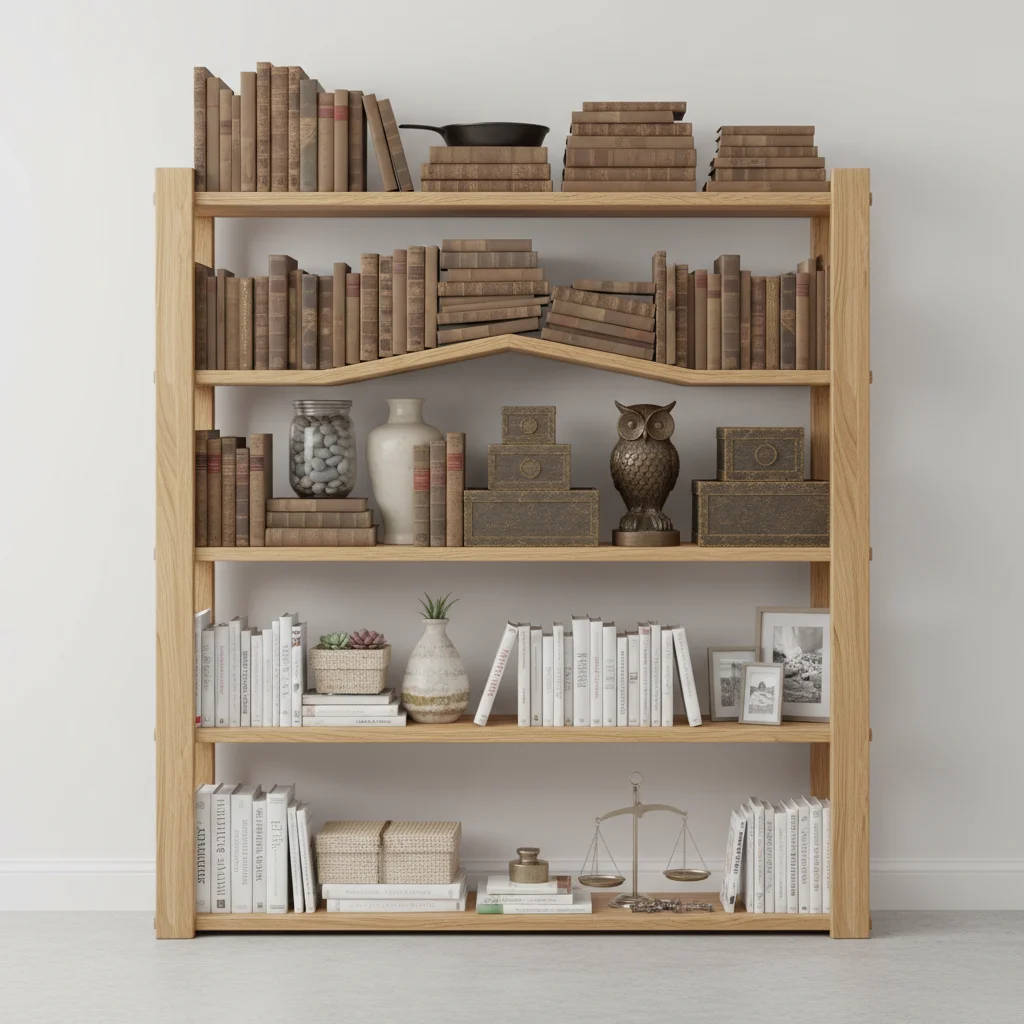
Understanding the weight capacity of your bookshelf is crucial for both safety and longevity. Most standard bookshelves can safely hold between 20 to 50 pounds per shelf, depending on the material, construction, and design. Overloading a bookshelf can lead to bowing, structural damage, or even collapse, posing a significant risk to your belongings and anyone nearby. This guide will help you determine how much weight your shelves can truly bear.
Factors Influencing Bookshelf Weight Capacity
Several key factors dictate how much weight a bookshelf can support. The material is paramount; solid wood shelves generally offer the highest capacity, followed by engineered wood products like MDF or particleboard. Metal shelves, especially those with reinforced frames, can also handle substantial loads. The thickness of the shelves and the method of attachment to the frame or wall also play a critical role. Thicker shelves are less prone to bowing, and securely anchored shelves distribute weight more effectively. For home furniture buying guides on this site.
The design and construction of the bookshelf are equally important. Shelves with a solid back panel or cross-bracing tend to be more stable and can support more weight than open-back designs. Adjustable shelves, while versatile, might have slightly lower weight capacities than fixed shelves due to the reliance on pins or clips. Always check the manufacturer’s specifications if available, as they provide the most accurate information for your specific unit.
Calculating Approximate Weight Capacity
While manufacturer specifications are ideal, you can estimate a bookshelf’s capacity by considering its components. For solid wood shelves, a good rule of thumb is 30-50 pounds per linear foot for shelves that are 10-12 inches deep. Engineered wood shelves might be closer to 20-30 pounds per linear foot. Remember to account for the total weight of your books, which can be surprisingly heavy. A typical hardcover book weighs about 2-3 pounds, while paperbacks are around 0.5-1 pound.
When loading your shelves, distribute the weight evenly. Place heavier items closer to the vertical supports or on lower shelves. Avoid concentrating all heavy items in the center of a long shelf, as this increases the likelihood of bowing. If you notice any signs of stress, such as bowing or cracking, immediately redistribute the weight or remove some items.
Tips for Maximizing Bookshelf Durability
|
Our Picks for the Best Book Shelf in 2026
As an Amazon Associate I earn from qualifying purchases.
|
||
| Num | Product | Action |
|---|---|---|
| 1 | Furinno JAYA Book Shelf, 5-Tier Bookshelf, Bookcase with Adjustable Shelves, 9.5" x 24.5" x 71.2", for Organization and Storage, for Living Room, Bedroom, Home Office, Blackwood |

|
| 2 | VASAGLE Bookshelf, Tree-Shaped Bookcase with 13 Storage Shelves, Rounded Corners, 9.8”D x 33.9”W x 55.1”H, Rustic Brown ULBC67BXV1 |
|
| 3 | NUMENN Bookshelf, 5 Tier Bookshelves, Home Office Bookcase Shelf Storage Organizer, Free Standing Storage Shelving Unit for Bedroom, Living Room and Home Office, Vintage |
|
| 4 | NUMENN Triple Column 5 Tier Bookshelf, Bookcase with 14 Open Display Shelves, Adjustable Rustic Industrial Style Book Shelves, Modern Bookshelves for Bedroom, Living Room and Home Office, Vintage |
|
| 5 | VASAGLE CUSTOS Collection - Bookshelf, 5-Tier Bookcase, Book Shelf, Open Storage Shelf, 9.4 x 23.6 x 52.8 Inches, for Living Room, Home Office, Dinning Room, Cloud White ULBC165T14 |
|
| 6 | VASAGLE CUSTOS Collection - Bookshelf, 6-Tier Bookcase, Book Shelf, Open Storage Shelf, 9.4 x 23.6 x 63.3 Inches, for Living Room, Home Office, Dinning Room, Cloud White ULBC166T14 |
|
| 7 | Mavivegue Bookcase, 18-Cube Extra Large Book Shelf, DIY Cube Storage Organizer for Bedroom, Living Room, Home Office - Black |
|
| 8 | DUMOS 5 Tiers Bookshelf, Classical Book Shelf, Tall Display Shelves in Living Room/Home/Office, Storage Organizer for CDs/Books/Movies, Modern Black |
|
| 9 | TVU 5-Tier Wooden Bookshelf, 65 Inch Tall Bookshelf with Storage, Floor Standing Modern Style Display Bookcase for Living Room, Office, Study Room, Entryway, Brown |
|
| 10 | NUMENN 5 Tier Bookshelf, Tall Bookcase Shelf Storage Organizer, Modern Book Shelf for Bedroom, Living Room and Home Office, Vintage |
|
- Always anchor tall or heavy bookshelves to the wall to prevent tipping.
- Distribute weight evenly across each shelf, placing heavier items near the ends.
- Avoid placing excessively heavy objects like large sculptures or multiple stacks of encyclopedias on a single shelf.
- Regularly inspect your shelves for signs of bowing, cracking, or instability.
- Consider adding extra support brackets for particularly long or heavily loaded shelves.
Choosing the Right Bookshelf for Heavy Collections
If you have a substantial collection of heavy books or plan to store other weighty items, investing in a heavy-duty bookshelf is a wise decision. Look for units made from solid hardwoods like oak or maple, or those with robust metal frames. Shelves with thicker panels (at least 1 inch) and fixed, non-adjustable designs will offer superior support. Reinforced back panels and sturdy vertical supports are also indicators of higher weight capacity.
When shopping, pay attention to the joinery. Dovetail joints, mortise and tenon joints, and strong metal fasteners indicate a well-constructed piece. Avoid bookshelves that rely solely on cam locks or flimsy hardware for structural integrity if you intend to store heavy items.For exceptionally heavy collections, consider custom-built shelves or industrial-grade shelving units designed for greater loads.
Maintaining Your Bookshelf’s Integrity
Proper maintenance can extend the life of your bookshelf and ensure it continues to safely hold your items. Periodically check all fasteners and tighten them if they have loosened over time. Clean your shelves regularly to prevent dust and debris buildup, which can add unnecessary weight and obscure signs of wear. If you move your bookshelf, always empty it first to prevent damage to the structure and ensure safe transport. By understanding and respecting the weight limits of your bookshelf, you can keep your collection organized and secure for years to come.

This was helpful for understanding the basics. I bought a particleboard unit thinking it would be fine for my paperbacks, but after reading about the 20-50 pounds per shelf range, I realized I might be pushing it with some of my heavier art books. It’s holding up for now, but I wish I’d known more about the material differences before I purchased. Next time I’ll invest in something more robust.
I’m so glad I read this before buying my new shelves! I have a huge collection of hardcover books and was worried about them bowing. Knowing that solid wood shelves offer the highest capacity really helped me make an informed decision. My new oak bookshelf feels incredibly sturdy and I’m confident it can hold everything without an issue.
I always just guessed with my bookshelves, so this guide was a lifesaver. I never considered the thickness of the shelves or the attachment method, but it makes so much sense now. I checked my current unit and realized why one of the shelves was starting to sag a bit. Definitely going to reinforce it or replace it soon with something better designed for heavier items.
Fantastic information! I’ve been looking for a new storage solution for my growing library, and the details about engineered wood products like MDF versus solid wood were super useful. It’s good to know what to look for to avoid overloading and potential damage. I feel much more prepared to choose a safe and durable bookshelf now.