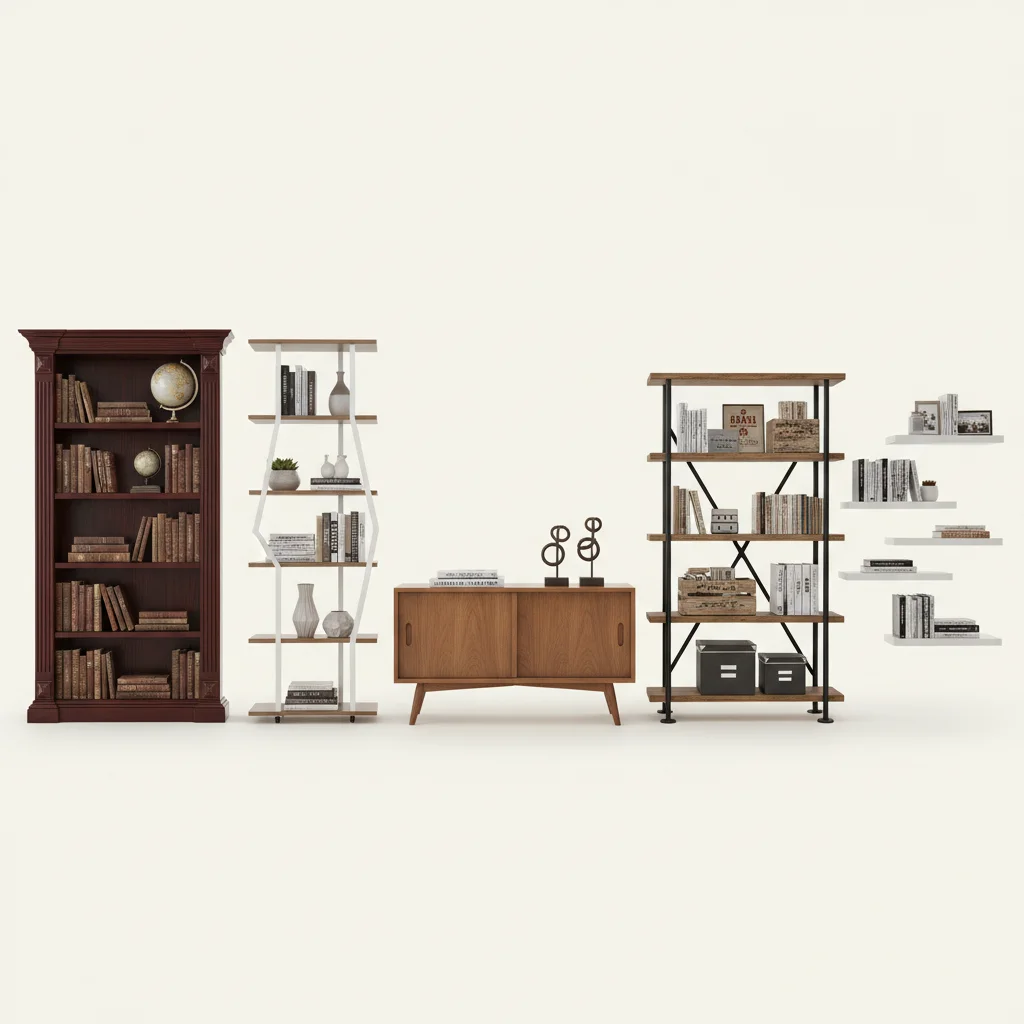
Choosing the right bookshelf style is crucial for complementing your home’s aesthetic and maximizing functionality. There are five primary bookshelf styles that cater to diverse interior designs, ranging from minimalist to traditional. Understanding these distinct styles will help you select a piece that not only stores your books but also enhances your living space.
Understanding Traditional Bookshelf Styles
Traditional bookshelves often feature classic designs with ornate details, rich wood finishes like mahogany or cherry, and sometimes include decorative molding or carved accents. These pieces are typically robust and designed to last, making them ideal for homes with a classic, antique, or formal decor. They often come with adjustable shelves and can be found in various heights and widths to accommodate extensive collections. The emphasis is on timeless elegance and substantial presence, often becoming a focal point in a study or living room.
Exploring Modern and Contemporary Bookshelf Designs
Modern and contemporary bookshelf styles prioritize clean lines, geometric shapes, and often incorporate a mix of materials such as metal, glass, and light-toned woods. These designs are characterized by their simplicity and functionality, often featuring open shelving or asymmetrical arrangements. They are perfect for minimalist, industrial, or urban living spaces, offering a sleek look that doesn’t overwhelm the room. The focus is on creating an airy feel and showcasing a curated selection of books and decor items.
The Appeal of Industrial Bookshelf Styles
|
Our Picks for the Best Book Shelf in 2026
As an Amazon Associate I earn from qualifying purchases.
|
||
| Num | Product | Action |
|---|---|---|
| 1 | VASAGLE CUSTOS Collection - Bookshelf, 5-Tier Bookcase, Book Shelf, Open Storage Shelf, 9.4 x 23.6 x 52.8 Inches, for Living Room, Home Office, Dinning Room, Cloud White ULBC165T14 |

|
| 2 | NUMENN Bookshelf, 5 Tier Bookshelves, Home Office Bookcase Shelf Storage Organizer, Free Standing Storage Shelving Unit for Bedroom, Living Room and Home Office, Vintage |
|
| 3 | NUMENN Triple Column 5 Tier Bookshelf, Bookcase with 14 Open Display Shelves, Adjustable Rustic Industrial Style Book Shelves, Modern Bookshelves for Bedroom, Living Room and Home Office, Vintage |
|
| 4 | VASAGLE CUSTOS Collection - Bookshelf, 6-Tier Bookcase, Book Shelf, Open Storage Shelf, 9.4 x 23.6 x 63.3 Inches, for Living Room, Home Office, Dinning Room, Cloud White ULBC166T14 |
|
| 5 | TVU 5-Tier Wooden Bookshelf, 65 Inch Tall Bookshelf with Storage, Floor Standing Modern Style Display Bookcase for Living Room, Office, Study Room, Entryway, Brown |
|
| 6 | NUMENN 5 Tier Bookshelf, Tall Bookcase Shelf Storage Organizer, Modern Book Shelf for Bedroom, Living Room and Home Office, Vintage |
|
| 7 | DUMOS 5 Tiers Bookshelf, Classical Book Shelf, Tall Display Shelves in Living Room/Home/Office, Storage Organizer for CDs/Books/Movies, Modern Black |
|
| 8 | Furinno JAYA Book Shelf, 5-Tier Bookshelf, Bookcase with Adjustable Shelves, 9.5" x 24.5" x 71.2", for Organization and Storage, for Living Room, Bedroom, Home Office, Blackwood |
|
| 9 | VASAGLE Bookshelf, Tree-Shaped Bookcase with 13 Storage Shelves, Rounded Corners, 9.8”D x 33.9”W x 55.1”H, Rustic Brown ULBC67BXV1 |
|
| 10 | Mavivegue Bookcase, 18-Cube Extra Large Book Shelf, DIY Cube Storage Organizer for Bedroom, Living Room, Home Office - Black |
|
Industrial bookshelves draw inspiration from factory and warehouse aesthetics, featuring raw materials like distressed wood, iron, and exposed metal piping. These styles often have a rugged, utilitarian look with visible bolts and sturdy frames. They are incredibly durable and offer a unique, edgy charm that pairs well with loft apartments, rustic interiors, or spaces aiming for an urban-industrial vibe. The robust construction ensures they can hold a significant amount of weight, making them practical as well as stylish.
Farmhouse and Rustic Bookshelf Options
Farmhouse and rustic bookshelf styles evoke a sense of warmth, comfort, and natural beauty. They typically feature reclaimed wood, distressed finishes, and simple, sturdy construction. Common characteristics include X-braces, barn door elements, and a focus on natural textures. These bookshelves are perfect for creating a cozy, inviting atmosphere in country-style homes, suburban houses, or any space seeking a touch of pastoral charm. They often blend seamlessly with other natural elements in a room.
Bohemian and Eclectic Bookshelf Choices
Bohemian and eclectic bookshelf styles are all about individuality, vibrant colors, and a mix of patterns and textures. These designs often incorporate unique materials, global influences, and a relaxed, free-spirited aesthetic. You might find bookshelves made from rattan, bamboo, or brightly painted wood, often with intricate carvings or woven details. They are ideal for creative spaces that embrace a diverse collection of items and a laid-back, artistic vibe. The key is to create a personalized and visually interesting display.
- Traditional: Ornate details, rich wood, formal elegance.
- Modern: Clean lines, geometric shapes, mixed materials.
- Industrial: Raw materials, metal accents, utilitarian look.
- Farmhouse: Reclaimed wood, distressed finishes, cozy charm.
- Bohemian: Unique materials, vibrant colors, eclectic mix.
When selecting your bookshelf, consider not only the aesthetic but also the practical aspects like size, material durability, and how it integrates with your existing furniture. A well-chosen bookshelf can significantly enhance your home’s overall design. For a wide range of options that fit various styles, consider browsing collections at. If you’re looking for something with a specific, high-end finish, explore the offerings at.

I was really struggling to find a bookshelf that didn’t look out of place in my living room, which has a very classic, almost antique feel. The section on traditional bookshelf styles was super helpful. I ended up getting a beautiful mahogany piece with some lovely carved accents, and it fits in perfectly. It’s so sturdy and holds all my old books without a problem.
I’m a big fan of minimalist design, and I appreciated the breakdown of those styles. I found a great floating shelf system that really opened up my small apartment. My only minor gripe is that some of the examples felt a bit out of my budget, but I was able to find a similar, more affordable option after some searching. Still, it gave me a good starting point.
I was hoping to find more options for really tall bookshelves. While the information on various heights was useful, I have a huge collection and need something that goes almost to the ceiling. The adjustable shelves are a nice feature, but I wish there were more specific recommendations for very large collections. It’s a good overview, but didn’t quite solve my specific storage challenge.
This was exactly what I needed to differentiate between all the different types of bookshelves out there. I always thought a bookshelf was just a bookshelf! The explanation of how each style complements different home aesthetics made so much sense. I finally understand why certain pieces just ‘work’ in a room. My home now looks much more cohesive.