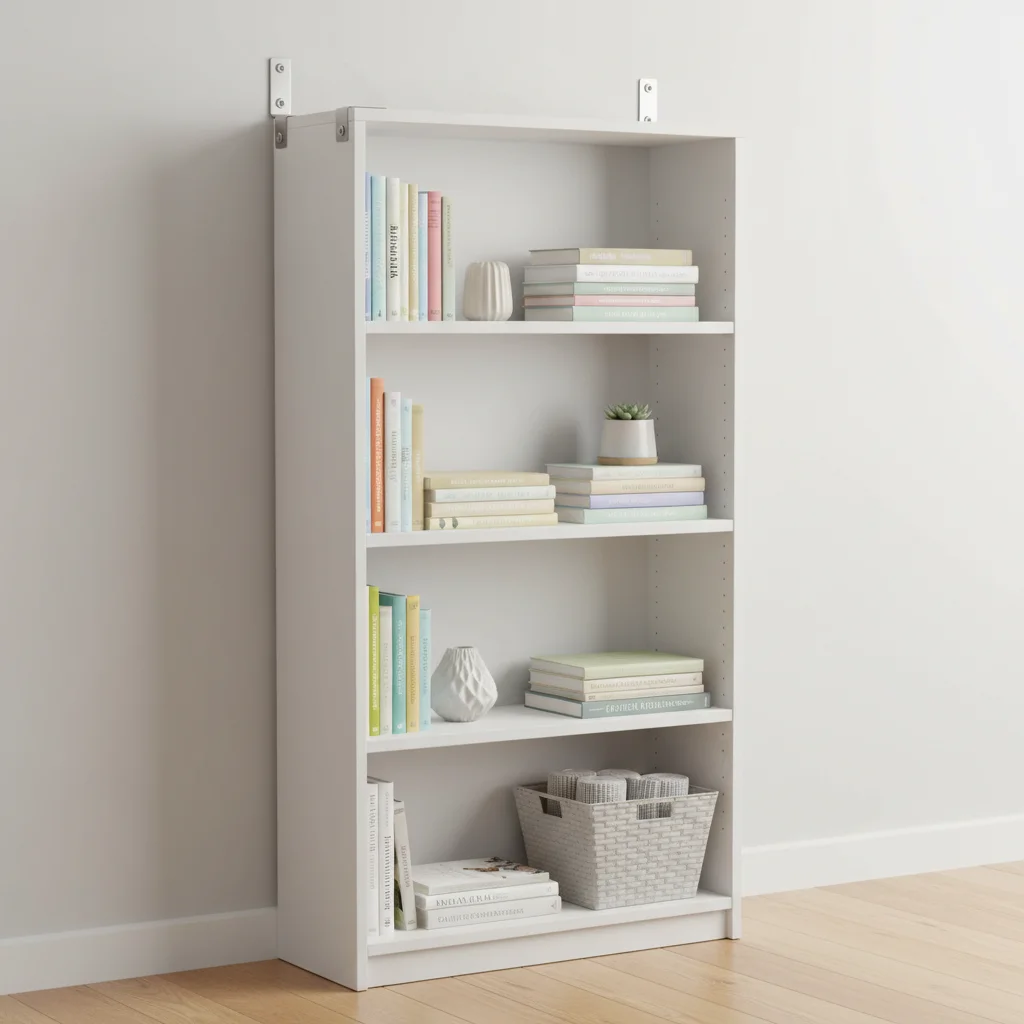
Ensuring bookshelf stability is crucial for both the longevity of your furniture and, more importantly, the safety of your household. A wobbly or unstable bookshelf poses a significant risk, especially in homes with children or pets. There are five key methods you can employ to prevent tipping and secure your bookshelves effectively.
Understanding the Risks of Unstable Bookshelves
An unstable bookshelf isn’t just an inconvenience; it’s a potential hazard. Tipping bookshelves can cause serious injuries, damage to property, and ruin valuable collections. Factors like uneven floors, heavy loads, and improper assembly can all contribute to instability. Recognizing these risks is the first step in implementing preventative measures.
Anchoring Your Bookshelf to the Wall
The most effective way to prevent a bookshelf from tipping is to anchor it securely to a wall. Most bookshelves come with anti-tip kits, which typically include straps or L-brackets. These kits are designed to attach the top of the bookshelf to a wall stud, providing a strong, immovable connection. Always locate a wall stud for maximum security; drywall anchors alone may not be sufficient for heavy loads.
Proper Weight Distribution and Loading
How you load your bookshelf significantly impacts its stability. Always place heavier items on the lower shelves. This lowers the center of gravity, making the unit less prone to tipping. Distribute books and decor evenly across each shelf rather than concentrating weight in one area. Overloading shelves can also lead to bowing or structural failure, further compromising stability.
Leveling the Bookshelf on Uneven Surfaces
|
Our Picks for the Best Book Shelf in 2026
As an Amazon Associate I earn from qualifying purchases.
|
||
| Num | Product | Action |
|---|---|---|
| 1 | NUMENN Triple Column 5 Tier Bookshelf, Bookcase with 14 Open Display Shelves, Adjustable Rustic Industrial Style Book Shelves, Modern Bookshelves for Bedroom, Living Room and Home Office, Vintage |

|
| 2 | VASAGLE CUSTOS Collection - Bookshelf, 6-Tier Bookcase, Book Shelf, Open Storage Shelf, 9.4 x 23.6 x 63.3 Inches, for Living Room, Home Office, Dinning Room, Cloud White ULBC166T14 |
|
| 3 | VASAGLE Bookshelf, Tree-Shaped Bookcase with 13 Storage Shelves, Rounded Corners, 9.8”D x 33.9”W x 55.1”H, Rustic Brown ULBC67BXV1 |
|
| 4 | VASAGLE CUSTOS Collection - Bookshelf, 5-Tier Bookcase, Book Shelf, Open Storage Shelf, 9.4 x 23.6 x 52.8 Inches, for Living Room, Home Office, Dinning Room, Cloud White ULBC165T14 |
|
| 5 | Furinno JAYA Book Shelf, 5-Tier Bookshelf, Bookcase with Adjustable Shelves, 9.5" x 24.5" x 71.2", for Organization and Storage, for Living Room, Bedroom, Home Office, Blackwood |
|
| 6 | NUMENN 5 Tier Bookshelf, Tall Bookcase Shelf Storage Organizer, Modern Book Shelf for Bedroom, Living Room and Home Office, Vintage |
|
| 7 | TVU 5-Tier Wooden Bookshelf, 65 Inch Tall Bookshelf with Storage, Floor Standing Modern Style Display Bookcase for Living Room, Office, Study Room, Entryway, Brown |
|
| 8 | NUMENN Bookshelf, 5 Tier Bookshelves, Home Office Bookcase Shelf Storage Organizer, Free Standing Storage Shelving Unit for Bedroom, Living Room and Home Office, Vintage |
|
| 9 | Mavivegue Bookcase, 18-Cube Extra Large Book Shelf, DIY Cube Storage Organizer for Bedroom, Living Room, Home Office - Black |
|
| 10 | DUMOS 5 Tiers Bookshelf, Classical Book Shelf, Tall Display Shelves in Living Room/Home/Office, Storage Organizer for CDs/Books/Movies, Modern Black |
|
Uneven floors are a common culprit for wobbly furniture. Many bookshelves come with adjustable feet or glides that can be twisted to compensate for irregularities in the floor. If your bookshelf lacks these, you can use shims – small, thin pieces of wood or plastic – placed under the base to create a level surface. A spirit level is an essential tool for this task, ensuring the bookshelf is perfectly plumb.
- Check the floor for any noticeable slopes or dips.
- Adjust the bookshelf’s feet or glides until it no longer wobbles.
- Use shims discreetly under the base if adjustable feet are not present.
- Verify the bookshelf is level using a spirit level on multiple surfaces.
- Re-check stability after loading the shelves with books.
Regular Maintenance and Inspection
Even a properly installed bookshelf requires periodic checks. Over time, screws can loosen, and connections can weaken. Regularly inspect all hardware, tightening any loose screws or bolts. Check the wall anchors to ensure they are still firmly in place. If you notice any signs of wear or damage, address them promptly to maintain optimal stability and safety.
Choosing a Stable Bookshelf Design
When purchasing a new bookshelf, consider designs known for their inherent stability. Wider and deeper bases generally offer more stability than narrow, tall units. Bookshelves made from solid wood or metal tend to be sturdier than those constructed from particleboard. Look for models with a robust back panel, as this can also contribute to the overall rigidity of the structure.

I’m so glad I read this! We just got a new tall bookshelf for my son’s room, and I hadn’t even thought about anchoring it. The instructions for using the anti-tip kit were super clear, and now I feel much safer knowing it won’t tip over, even if he tries to climb it (which he definitely will!).
This was a lifesaver! After our cat nearly knocked over a shelf trying to get to a sunbeam, I knew I needed to do something. The section on understanding the risks really hit home. I’ve now anchored all our taller units, and the peace of mind is priceless.
While the advice on anchoring is solid, I was hoping for more ideas for renters who can’t drill into walls. My landlord is super strict, so I’m still looking for solutions beyond just careful loading. The uneven floor suggestion was helpful though, I’ll try shims.
Great tips here. I’ve always just loaded my shelves up, but the point about distributing weight evenly makes a lot of sense. I rearranged my heaviest books to the bottom shelves, and I can already feel a difference in how stable my older unit is. Wish I’d known this years ago!