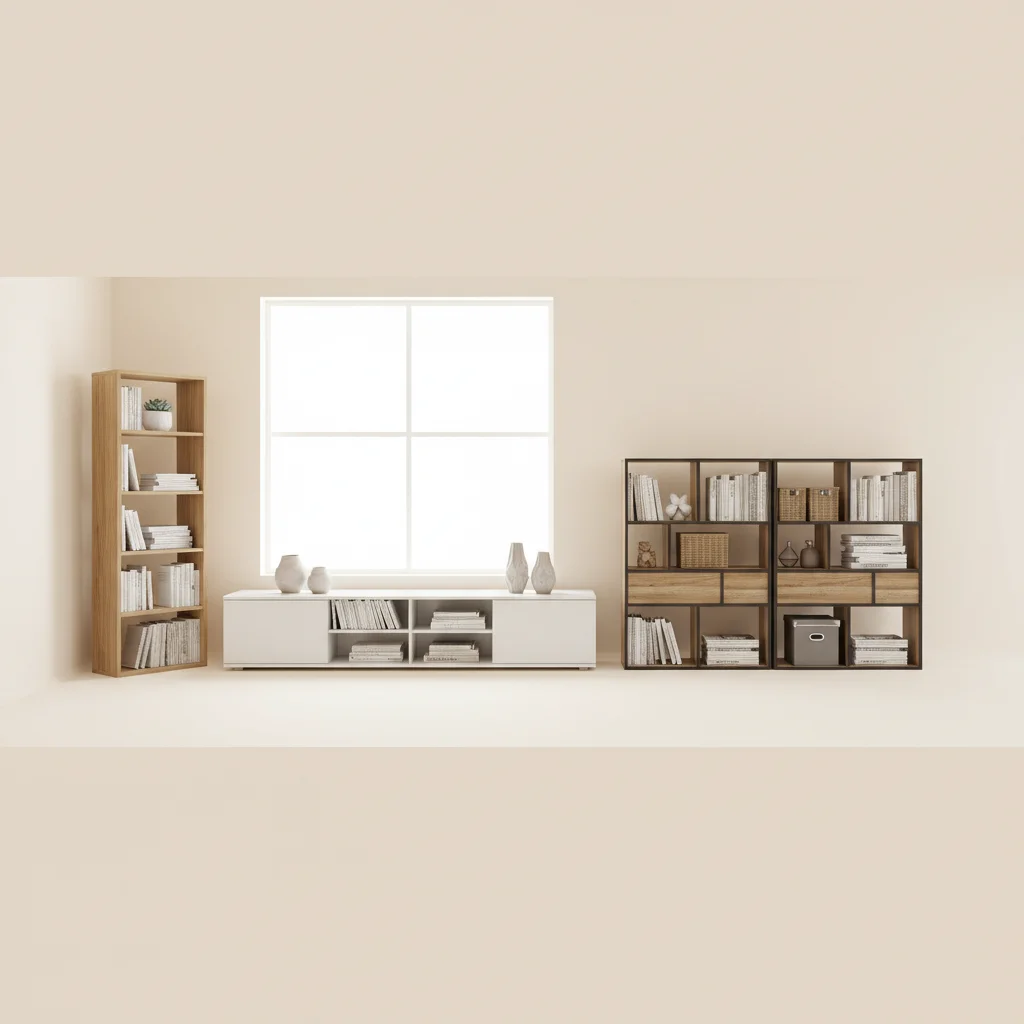
Optimal bookshelf placement involves considering three key factors: room traffic, natural light, and wall space. Strategic positioning not only enhances the room’s aesthetic but also improves accessibility and protects your collection. Avoid common pitfalls by planning the layout before moving any furniture.
Understanding Room Traffic Patterns
The flow of traffic in a room is crucial for bookshelf placement. A bookshelf should never obstruct pathways or create awkward bottlenecks. In a living room, for instance, placing a tall, wide bookshelf directly across from a main doorway can make the room feel cramped and difficult to navigate. Instead, consider a wall that is less frequently used for passage, perhaps a corner or a wall adjacent to a seating area. This ensures that people can move freely without bumping into the shelves or their contents. For compare top home furniture on this site.
For smaller rooms, a narrow or vertical bookshelf might be more appropriate, tucked into an alcove or against a wall that doesn’t see much foot traffic. In a home office, placing the bookshelf within easy reach of your desk but not directly behind your chair can improve efficiency without sacrificing space. Always visualize the path people will take through the room before committing to a spot.
Leveraging Natural Light and Avoiding Damage
Natural light is wonderful for reading, but direct sunlight can be detrimental to books and wooden bookshelves over time. UV rays can fade book covers, yellow pages, and even warp wooden frames. Therefore, it’s generally best to avoid placing bookshelves directly in front of or opposite windows that receive strong, unfiltered sunlight for extended periods. If such a placement is unavoidable, consider using UV-filtering window treatments or positioning the bookshelf at an angle where it receives indirect light.
Conversely, a bookshelf placed in a perpetually dark corner might make it difficult to find books and can contribute to a gloomy atmosphere. Aim for a spot that receives adequate ambient light, either natural or artificial, to make your collection inviting and accessible.can help illuminate darker sections.
Maximizing Wall Space and Room Aesthetics
|
Our Picks for the Best Book Shelf in 2026
As an Amazon Associate I earn from qualifying purchases.
|
||
| Num | Product | Action |
|---|---|---|
| 1 | DUMOS 5 Tiers Bookshelf, Classical Book Shelf, Tall Display Shelves in Living Room/Home/Office, Storage Organizer for CDs/Books/Movies, Modern Black |

|
| 2 | Furinno JAYA Book Shelf, 5-Tier Bookshelf, Bookcase with Adjustable Shelves, 9.5" x 24.5" x 71.2", for Organization and Storage, for Living Room, Bedroom, Home Office, Blackwood |
|
| 3 | VASAGLE CUSTOS Collection - Bookshelf, 6-Tier Bookcase, Book Shelf, Open Storage Shelf, 9.4 x 23.6 x 63.3 Inches, for Living Room, Home Office, Dinning Room, Cloud White ULBC166T14 |
|
| 4 | Mavivegue Bookcase, 18-Cube Extra Large Book Shelf, DIY Cube Storage Organizer for Bedroom, Living Room, Home Office - Black |
|
| 5 | VASAGLE CUSTOS Collection - Bookshelf, 5-Tier Bookcase, Book Shelf, Open Storage Shelf, 9.4 x 23.6 x 52.8 Inches, for Living Room, Home Office, Dinning Room, Cloud White ULBC165T14 |
|
| 6 | NUMENN Triple Column 5 Tier Bookshelf, Bookcase with 14 Open Display Shelves, Adjustable Rustic Industrial Style Book Shelves, Modern Bookshelves for Bedroom, Living Room and Home Office, Vintage |
|
| 7 | NUMENN Bookshelf, 5 Tier Bookshelves, Home Office Bookcase Shelf Storage Organizer, Free Standing Storage Shelving Unit for Bedroom, Living Room and Home Office, Vintage |
|
| 8 | NUMENN 5 Tier Bookshelf, Tall Bookcase Shelf Storage Organizer, Modern Book Shelf for Bedroom, Living Room and Home Office, Vintage |
|
| 9 | VASAGLE Bookshelf, Tree-Shaped Bookcase with 13 Storage Shelves, Rounded Corners, 9.8”D x 33.9”W x 55.1”H, Rustic Brown ULBC67BXV1 |
|
| 10 | TVU 5-Tier Wooden Bookshelf, 65 Inch Tall Bookshelf with Storage, Floor Standing Modern Style Display Bookcase for Living Room, Office, Study Room, Entryway, Brown |
|
Effective bookshelf placement is also about maximizing your available wall space and enhancing the overall aesthetic of the room. Tall, narrow bookshelves can draw the eye upwards, making a room feel larger and more open. Wide, low bookshelves can create a sense of grounding and provide additional surface area for decor. Consider the existing furniture arrangement and how the bookshelf will integrate with it. A large, imposing bookshelf might overwhelm a small room, while a small, delicate one could get lost in a vast space.
Think about the visual balance. If you have a large sofa on one wall, a substantial bookshelf on an adjacent wall can create a harmonious look. For rooms with unique architectural features, such as sloped ceilings or unusual corners, custom or modular bookshelves can be an excellent solution. Always measure your space carefully and consider the dimensions of the bookshelf you intend to purchase.
- Measure the wall space accurately, accounting for doorways and windows.
- Consider the height and width of the bookshelf in relation to other furniture.
- Ensure there’s enough clearance for opening doors or drawers if applicable.
- Plan for future expansion if your book collection is likely to grow.
- Visualize the bookshelf in the space using tape or cardboard cutouts.
Integrating Bookshelves into Multi-Functional Spaces
Many modern homes feature open-plan living or multi-functional rooms. In these scenarios, bookshelves can serve more than just storage; they can act as subtle room dividers, defining different zones within a larger space. A backless or open-shelf unit, for example, can separate a living area from a dining space without completely blocking light or sightlines. This creates a sense of intimacy while maintaining an open feel.
When using a bookshelf as a room divider, ensure it is stable and properly anchored, especially if it’s tall. Consider the visual impact from both sides of the divider. Styling the shelves with decorative items, plants, and a mix of books can make it an attractive feature from any angle.offers versatile options for these types of arrangements.
Final Considerations for Long-Term Placement
Before finalizing your bookshelf’s location, think about long-term factors. Is the wall sturdy enough to support a heavy, fully loaded bookshelf? Are there electrical outlets nearby if you plan to add lighting? Consider the proximity to heat sources like radiators or fireplaces, which can also damage books and wood. Humidity levels are another factor; avoid placing bookshelves in areas prone to dampness, such as basements without proper climate control, to prevent mold and mildew.
