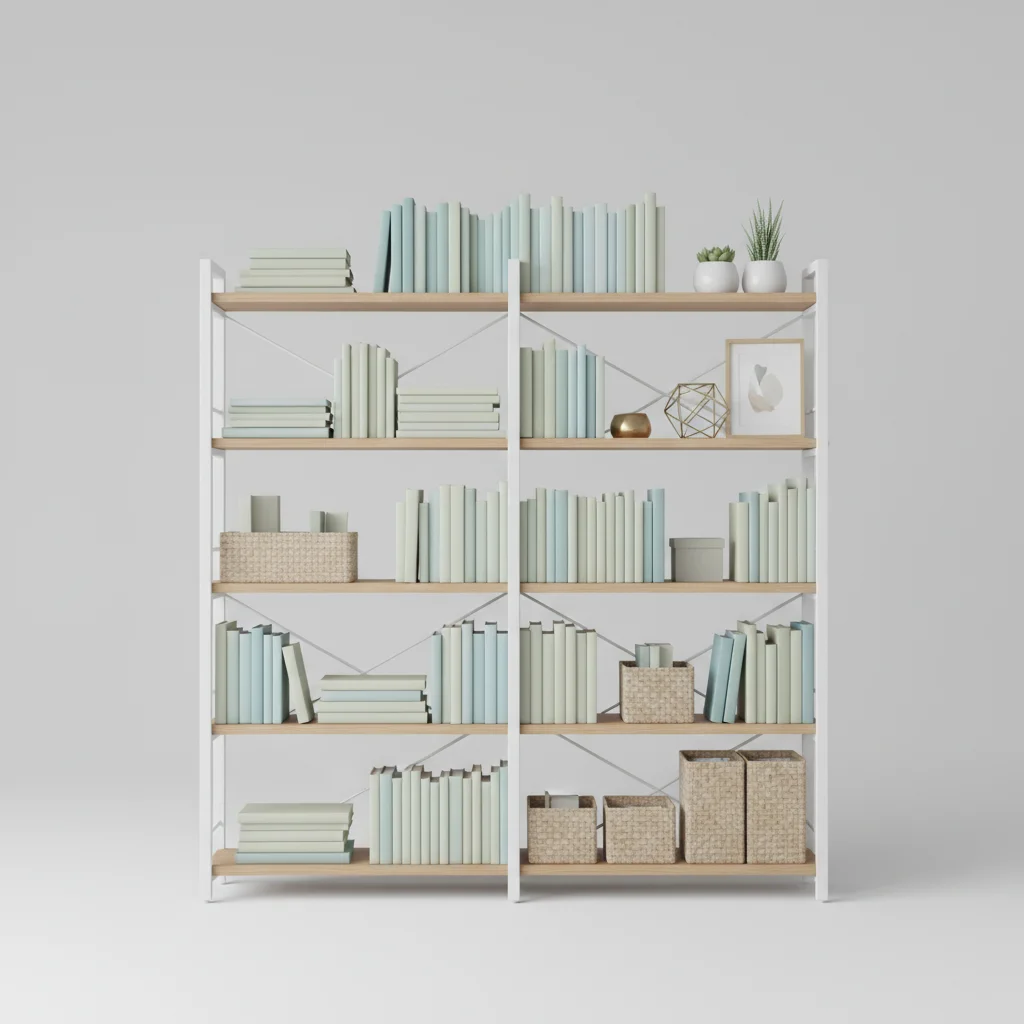
Effective bookshelf organization transforms cluttered spaces into serene, functional areas. The most effective way to declutter your book collection is by systematically sorting, categorizing, and optimizing your display, which involves removing all items, creating ‘keep,’ ‘donate/sell,’ and ‘relocate’ piles, and then arranging the remaining books by genre or author.
Assess Your Current Collection
Before organizing, remove every item from your bookshelf. This provides a clean slate and reveals the true volume of your collection. As you remove each item, evaluate its value: Is it a beloved read, one you plan to read, or simply collecting dust? This initial assessment is crucial for deciding what to keep and what to let go of.
Create three distinct piles: keep, donate/sell, and relocate. Be honest about books you’re unlikely to reread or those that no longer align with your interests. Many find it helpful to set a time limit for unread books; if you haven’t read it in a year or two, it might be time to part ways.
Categorize and Group Your Books
Once you’ve decided what to keep, categorize your books. Popular methods include grouping by genre (fiction, non-fiction, mystery), author, or even color for aesthetics. For practical organization, grouping by genre or subject matter is often most efficient.
Consider creating sub-categories within broader genres. For example, your non-fiction section could be divided into history, science, and biographies. This level of detail makes locating specific books much easier. Always group series together, ensuring they remain in order.
- Organize by genre (fiction, non-fiction, biography, etc.)
- Group books by the same author together
- Arrange series in chronological order
- Consider a color-coded system for visual appeal
- Separate reference books for easy access
Optimize Your Bookshelf Layout
|
Our Picks for the Best Book Shelf in 2026
As an Amazon Associate I earn from qualifying purchases.
|
||
| Num | Product | Action |
|---|---|---|
| 1 | TVU 5-Tier Wooden Bookshelf, 65 Inch Tall Bookshelf with Storage, Floor Standing Modern Style Display Bookcase for Living Room, Office, Study Room, Entryway, Brown |

|
| 2 | NUMENN 5 Tier Bookshelf, Tall Bookcase Shelf Storage Organizer, Modern Book Shelf for Bedroom, Living Room and Home Office, Vintage |
|
| 3 | Furinno JAYA Book Shelf, 5-Tier Bookshelf, Bookcase with Adjustable Shelves, 9.5" x 24.5" x 71.2", for Organization and Storage, for Living Room, Bedroom, Home Office, Blackwood |
|
| 4 | VASAGLE Bookshelf, Tree-Shaped Bookcase with 13 Storage Shelves, Rounded Corners, 9.8”D x 33.9”W x 55.1”H, Rustic Brown ULBC67BXV1 |
|
| 5 | DUMOS 5 Tiers Bookshelf, Classical Book Shelf, Tall Display Shelves in Living Room/Home/Office, Storage Organizer for CDs/Books/Movies, Modern Black |
|
| 6 | Mavivegue Bookcase, 18-Cube Extra Large Book Shelf, DIY Cube Storage Organizer for Bedroom, Living Room, Home Office - Black |
|
| 7 | VASAGLE CUSTOS Collection - Bookshelf, 5-Tier Bookcase, Book Shelf, Open Storage Shelf, 9.4 x 23.6 x 52.8 Inches, for Living Room, Home Office, Dinning Room, Cloud White ULBC165T14 |
|
| 8 | VASAGLE CUSTOS Collection - Bookshelf, 6-Tier Bookcase, Book Shelf, Open Storage Shelf, 9.4 x 23.6 x 63.3 Inches, for Living Room, Home Office, Dinning Room, Cloud White ULBC166T14 |
|
| 9 | NUMENN Bookshelf, 5 Tier Bookshelves, Home Office Bookcase Shelf Storage Organizer, Free Standing Storage Shelving Unit for Bedroom, Living Room and Home Office, Vintage |
|
| 10 | NUMENN Triple Column 5 Tier Bookshelf, Bookcase with 14 Open Display Shelves, Adjustable Rustic Industrial Style Book Shelves, Modern Bookshelves for Bedroom, Living Room and Home Office, Vintage |
|
With your books categorized, arrange them on the shelves. Place your largest or heaviest books on the bottom shelves for stability. Varying the orientation of books—some stacked horizontally, others vertically—adds visual interest and breaks monotony. Leave some empty space on each shelf to prevent a cramped look and allow for future additions.
Incorporate decorative elements sparingly. A few well-chosen bookends, a small plant, or a framed photo can enhance the aesthetic without overwhelming the space. Remember, the goal is to highlight your book collection, not to hide it behind excessive decor.This approach ensures your bookshelf remains both functional and visually appealing.
Maintain Your Organized Bookshelf
Maintaining an organized bookshelf requires ongoing effort. Periodically review your collection, especially after acquiring new books. Integrate new additions thoughtfully, ensuring they fit within your established categories. Regularly dust your shelves and books to keep them looking fresh and clean.
Consider implementing a regular schedule for tidying to prevent clutter from accumulating again.
Frequently Asked Questions
What is the first step to effectively organize a bookshelf?
The first step to effectively organize a bookshelf is to remove all items from the shelves. This allows you to assess the entire collection and provides a clean slate for sorting. It helps in making informed decisions about which books to keep, donate, or relocate.
How should I categorize my books for better organization?
You should categorize your books based on your personal preferences and how you use your bookshelf. Common methods include grouping by genre (fiction, non-fiction), author, or even color for aesthetic appeal. Grouping by genre or subject matter is often the most efficient for practical organization.
What are some tips for optimizing bookshelf layout?
To optimize your bookshelf layout, place the largest or heaviest books on the bottom shelves for stability. Vary the orientation of books, stacking some horizontally and others vertically, to add visual interest. Leave some empty space on each shelf to prevent a cramped look and allow for future additions.
How often should I maintain my organized bookshelf?
You should maintain your organized bookshelf periodically, especially after acquiring new books. Regularly review your collection to integrate new additions thoughtfully within established categories. Dusting your shelves and books regularly also helps keep them looking fresh and clean.
Is it okay to use decorative items on a bookshelf?
Yes, it is okay to use decorative items on a bookshelf, but sparingly. A few well-chosen bookends, a small plant, or a framed photo can enhance the aesthetic without overwhelming the space. The goal is to highlight your book collection, not to hide it behind excessive decor.
How to Declutter and Organize Your Bookshelf
Transform your cluttered bookshelf into an organized and visually appealing display by following these simple steps for sorting, categorizing, and arranging your book collection.
Remove all books from your shelves to get a clear view of your entire collection. Create three piles: 'keep,' 'donate/sell,' and 'relocate,' making honest decisions about each book's value and your likelihood of rereading it.
Group your kept books by genre, author, or even color, depending on your preference. For practical use, organizing by genre or subject matter is highly effective, and consider sub-categories for more detailed organization.
Arrange your categorized books on the shelves, placing heavier books on the bottom for stability. Vary book orientation (horizontal/vertical) for visual interest and leave some empty space to avoid a cramped appearance and allow for new additions.
Add a few decorative elements like bookends, a small plant, or a framed photo to enhance the aesthetic. Ensure these items complement your books rather than overwhelming the display, keeping the focus on your collection.
Periodically review your collection, especially after acquiring new books, to integrate them thoughtfully. Regularly dust your shelves and books to keep them clean and fresh, preventing future clutter buildup.

This guide completely transformed my cluttered office. I used to just shove books wherever they fit, but taking everything off and creating those distinct piles made such a difference. It really helped me optimize my display and create a more serene, functional area. My books finally have a system!
I’ve been meaning to organize my books for ages, and this really gave me the push I needed. The initial assessment step, where you evaluate each item’s value, was a game-changer for me. I realized how many books I was holding onto that I’d never reread. My shelves look so much better and more intentional now.
The tips for categorizing by genre or author were helpful, but I found it a little hard to stick to just three piles. I ended up with a ‘maybe’ pile that took a while to sort through. The overall idea is solid for decluttering, but be prepared to make some tough decisions about what to let go of.
I finally tackled my overflowing bookshelves using the ‘remove everything’ method mentioned. It was a bit daunting at first, but seeing the empty shelves really motivated me to be ruthless. My living room feels so much calmer now that everything is sorted into ‘keep,’ ‘donate/sell,’ and ‘relocate’ piles. Highly recommend this approach for anyone feeling overwhelmed by their book collection.