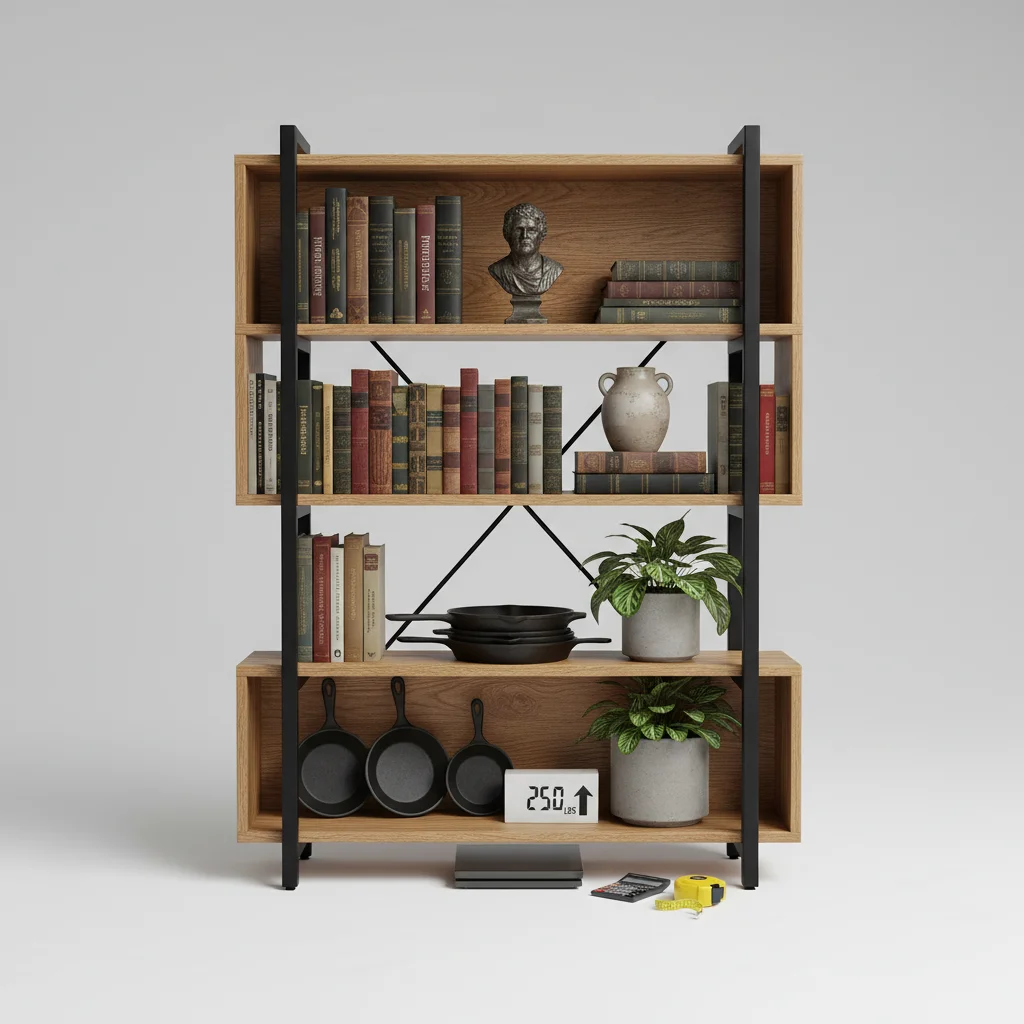
Understanding your bookshelf’s load capacity is crucial for both safety and longevity. On average, a standard bookshelf shelf can hold between 20 to 50 pounds per linear foot, though this can vary significantly based on material, construction, and design. Knowing how to calculate this capacity ensures your shelves don’t sag, break, or pose a tipping hazard, protecting your valuable collection and your home.
Factors Influencing Bookshelf Load Capacity
Several key factors determine how much weight a bookshelf can safely bear. The material is paramount; solid wood like oak or maple will naturally support more weight than particle board or MDF. Shelf thickness also plays a significant role, with thicker shelves generally offering greater strength. Furthermore, the method of construction, including the type of fasteners, joinery, and the presence of a back panel, all contribute to the overall structural integrity. A well-braced shelf with proper support will always outperform a flimsy one.
Calculating Weight for Your Collection
To accurately assess your needs, consider the weight of your books. Hardcover books typically weigh between 1.5 to 3 pounds each, while paperbacks are lighter, ranging from 0.5 to 1.5 pounds. Specialty books, such as art books or textbooks, can weigh considerably more, sometimes exceeding 5 pounds. It’s helpful to estimate the average weight of your books and then multiply by the number of books you plan to place on each shelf. Don’t forget to account for decorative items, which can add surprising weight.
- Measure the length and depth of each shelf.
- Estimate the average weight of your books.
- Consider the material and thickness of your current or desired bookshelf.
- Factor in any additional decorative items.
- Always err on the side of caution when estimating total weight.
Reinforcing Existing Bookshelves for More Weight
|
Our Picks for the Best Book Shelf in 2026
As an Amazon Associate I earn from qualifying purchases.
|
||
| Num | Product | Action |
|---|---|---|
| 1 | NUMENN 5 Tier Bookshelf, Tall Bookcase Shelf Storage Organizer, Modern Book Shelf for Bedroom, Living Room and Home Office, Vintage |

|
| 2 | VASAGLE Bookshelf, Tree-Shaped Bookcase with 13 Storage Shelves, Rounded Corners, 9.8”D x 33.9”W x 55.1”H, Rustic Brown ULBC67BXV1 |
|
| 3 | NUMENN Bookshelf, 5 Tier Bookshelves, Home Office Bookcase Shelf Storage Organizer, Free Standing Storage Shelving Unit for Bedroom, Living Room and Home Office, Vintage |
|
| 4 | TVU 5-Tier Wooden Bookshelf, 65 Inch Tall Bookshelf with Storage, Floor Standing Modern Style Display Bookcase for Living Room, Office, Study Room, Entryway, Brown |
|
| 5 | Mavivegue Bookcase, 18-Cube Extra Large Book Shelf, DIY Cube Storage Organizer for Bedroom, Living Room, Home Office - Black |
|
| 6 | Furinno JAYA Book Shelf, 5-Tier Bookshelf, Bookcase with Adjustable Shelves, 9.5" x 24.5" x 71.2", for Organization and Storage, for Living Room, Bedroom, Home Office, Blackwood |
|
| 7 | DUMOS 5 Tiers Bookshelf, Classical Book Shelf, Tall Display Shelves in Living Room/Home/Office, Storage Organizer for CDs/Books/Movies, Modern Black |
|
| 8 | VASAGLE CUSTOS Collection - Bookshelf, 5-Tier Bookcase, Book Shelf, Open Storage Shelf, 9.4 x 23.6 x 52.8 Inches, for Living Room, Home Office, Dinning Room, Cloud White ULBC165T14 |
|
| 9 | VASAGLE CUSTOS Collection - Bookshelf, 6-Tier Bookcase, Book Shelf, Open Storage Shelf, 9.4 x 23.6 x 63.3 Inches, for Living Room, Home Office, Dinning Room, Cloud White ULBC166T14 |
|
| 10 | NUMENN Triple Column 5 Tier Bookshelf, Bookcase with 14 Open Display Shelves, Adjustable Rustic Industrial Style Book Shelves, Modern Bookshelves for Bedroom, Living Room and Home Office, Vintage |
|
If your current bookshelf isn’t meeting your load capacity needs, there are several ways to reinforce it. Adding extra shelf pins or brackets can distribute weight more effectively. For shelves made of weaker materials, consider adding a solid wood or metal support beam underneath the center of longer shelves. A sturdy back panel, securely fastened, can also significantly improve stability and prevent racking. For heavier collections, anchoring the bookshelf to the wall is always recommended to prevent tipping, regardless of its load capacity.
Choosing the Right Bookshelf for Heavy Loads
When purchasing a new bookshelf with heavy loads in mind, prioritize models made from solid hardwoods or high-quality metal. Look for shelves that are at least 3/4 inch thick, and ideally 1 inch or more for very heavy collections. Adjustable shelves with robust metal pins are preferable to fixed shelves with weaker supports. Pay attention to the overall construction; dovetail or mortise and tenon joints are stronger than simple butt joints. Always check the manufacturer’s stated weight capacity, if available, and read reviews from other users.These heavy-duty options are designed specifically for extensive collections.
Maintenance and Safety Tips
Regularly inspect your bookshelves for any signs of sagging, bowing, or cracking, which can indicate that the load capacity is being exceeded. Distribute weight evenly across shelves rather than concentrating heavy items in one spot. Avoid overloading the top shelves, as this can increase the risk of tipping. For tall or heavily loaded bookshelves, wall anchoring kits are an inexpensive and essential safety measure, especially in homes with children or pets.Investing in quality anchors can provide peace of mind and prevent accidents.

This guide was super helpful! I always just guessed with my old particle board shelves and ended up with a saggy mess. Now I know exactly how to check the material and thickness to avoid that. My new oak bookshelf feels so much sturdier, and I’m confident it can hold all my heavy art books without an issue.
Finally, a clear explanation of bookshelf load capacity! I’ve been worried about my collection for ages, especially with some of my oversized textbooks. Understanding the 20 to 50 pounds per linear foot rule gives me so much peace of mind. I’m going to measure my shelves tonight!
The tips on fasteners and joinery were useful, but I wish there was a bit more detail on how to reinforce existing shelves. My current unit has a decent back panel, but the shelves themselves are a bit thin. It’s hard to tell if I can safely add more books or if I need to replace the whole thing.
Great info on calculating load capacity. I never really thought about the difference solid wood makes compared to MDF. It’s good to have a clearer idea of what to look for when buying new shelves. I’m still a bit nervous about overfilling, but at least now I have a better framework for assessing what’s safe.