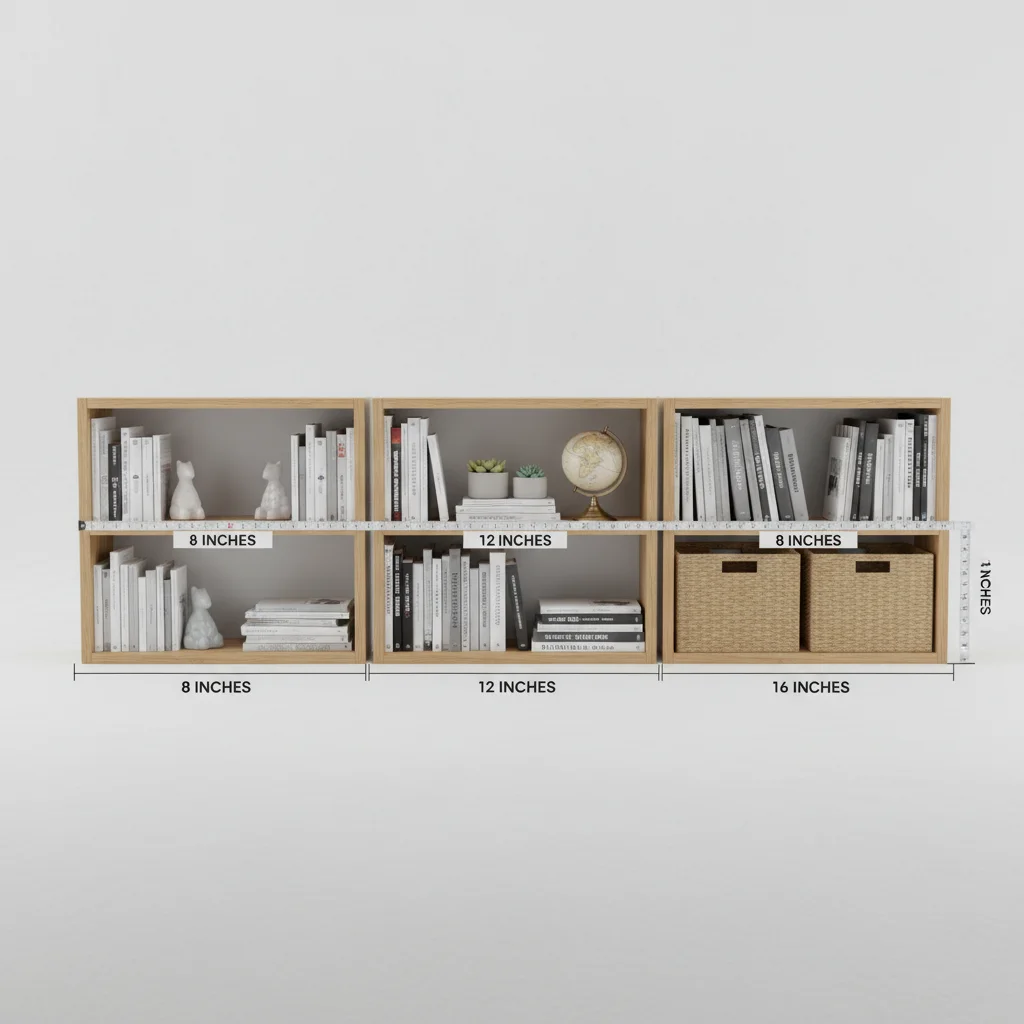
Choosing the correct bookshelf depth is crucial for both functionality and aesthetics, and the ideal measurement typically ranges from 10 to 12 inches for standard paperbacks and hardcovers. This range ensures books sit comfortably without excessive overhang or being pushed too far back, making them easy to access and visually appealing. Deeper shelves might be necessary for oversized art books or specific decorative items, while shallower options can work for small paperbacks or display-focused units.
Understanding Standard Bookshelf Depths
Most commercially available bookshelves adhere to a standard depth designed to accommodate the majority of book sizes. A depth of 10 to 12 inches (25 to 30 cm) is considered optimal. This allows for a slight margin around typical book dimensions, which usually fall between 8.5 to 9.5 inches for hardcovers and 7 to 8 inches for paperbacks. Shelves within this range prevent books from protruding too much, which can look untidy and increase the risk of them being knocked off. Conversely, shelves that are too deep can create wasted space behind books, making it harder to retrieve them and potentially leading to items being lost in the back.
Factors Influencing Your Bookshelf Depth Choice
Several factors should guide your decision on bookshelf depth. First, consider the size of your book collection. If you primarily own large format art books, coffee table books, or academic texts, you might need shelves that are 14 to 16 inches deep. Second, think about what else you plan to store. Decorative items, photo albums, or even small storage bins will require different depths. Third, the available space in your room plays a significant role. A very deep bookshelf in a narrow hallway can impede movement, while a shallow one in a large room might look disproportionate. Finally, the aesthetic you’re aiming for can influence depth; minimalist designs often favor shallower shelves, while more traditional styles might incorporate deeper, more robust units.
- Book Size: Measure your largest books to ensure they fit without overhang.
- Other Items: Account for decorative objects, binders, or storage boxes.
- Room Dimensions: Ensure the depth doesn’t obstruct walkways or overpower the space.
- Aesthetic Preference: Match the depth to your desired interior design style.
- Future Needs: Consider if your collection might grow to include larger items.
Optimizing Depth for Specific Book Types
|
Our Picks for the Best Book Shelf in 2026
As an Amazon Associate I earn from qualifying purchases.
|
||
| Num | Product | Action |
|---|---|---|
| 1 | Furinno JAYA Book Shelf, 5-Tier Bookshelf, Bookcase with Adjustable Shelves, 9.5" x 24.5" x 71.2", for Organization and Storage, for Living Room, Bedroom, Home Office, Blackwood |

|
| 2 | Mavivegue Bookcase, 18-Cube Extra Large Book Shelf, DIY Cube Storage Organizer for Bedroom, Living Room, Home Office - Black |
|
| 3 | VASAGLE CUSTOS Collection - Bookshelf, 6-Tier Bookcase, Book Shelf, Open Storage Shelf, 9.4 x 23.6 x 63.3 Inches, for Living Room, Home Office, Dinning Room, Cloud White ULBC166T14 |
|
| 4 | TVU 5-Tier Wooden Bookshelf, 65 Inch Tall Bookshelf with Storage, Floor Standing Modern Style Display Bookcase for Living Room, Office, Study Room, Entryway, Brown |
|
| 5 | DUMOS 5 Tiers Bookshelf, Classical Book Shelf, Tall Display Shelves in Living Room/Home/Office, Storage Organizer for CDs/Books/Movies, Modern Black |
|
| 6 | VASAGLE CUSTOS Collection - Bookshelf, 5-Tier Bookcase, Book Shelf, Open Storage Shelf, 9.4 x 23.6 x 52.8 Inches, for Living Room, Home Office, Dinning Room, Cloud White ULBC165T14 |
|
| 7 | NUMENN 5 Tier Bookshelf, Tall Bookcase Shelf Storage Organizer, Modern Book Shelf for Bedroom, Living Room and Home Office, Vintage |
|
| 8 | NUMENN Bookshelf, 5 Tier Bookshelves, Home Office Bookcase Shelf Storage Organizer, Free Standing Storage Shelving Unit for Bedroom, Living Room and Home Office, Vintage |
|
| 9 | NUMENN Triple Column 5 Tier Bookshelf, Bookcase with 14 Open Display Shelves, Adjustable Rustic Industrial Style Book Shelves, Modern Bookshelves for Bedroom, Living Room and Home Office, Vintage |
|
| 10 | VASAGLE Bookshelf, Tree-Shaped Bookcase with 13 Storage Shelves, Rounded Corners, 9.8”D x 33.9”W x 55.1”H, Rustic Brown ULBC67BXV1 |
|
Different types of books benefit from specific shelf depths. For instance, children’s books, which are often smaller and thinner, can be stored efficiently on shelves as shallow as 8 inches. Graphic novels and manga also tend to be smaller and can fit on these shallower shelves, maximizing space. On the other hand, oversized encyclopedias, atlases, or professional reference books often demand depths of 13 inches or more. It’s a good practice to measure the tallest and deepest books in your collection before committing to a specific bookshelf, especially if you have a diverse range of titles. This prevents the frustration of having books that don’t quite fit or look awkward on the shelf.
The Impact of Bookshelf Depth on Room Aesthetics
The depth of your bookshelf significantly impacts the overall look and feel of a room. A shallower bookshelf, typically 8-9 inches deep, can make a small room feel more open and less cluttered, as it takes up less floor space. These are excellent for displaying paperbacks or small decorative items. Conversely, a deeper bookshelf, perhaps 14-16 inches, can create a more substantial and imposing presence, suitable for larger rooms or dedicated home libraries. These deeper units can also offer more versatility for displaying larger decor pieces or even integrating small storage boxes. The visual weight of the bookshelf should be in harmony with the scale of your room and other furniture.
Customizing Bookshelf Depth for Unique Collections
For those with highly specialized or unusually sized collections, custom-built bookshelves offer the ultimate solution. This allows you to specify varying depths for different sections of your shelving unit, perfectly accommodating everything from miniature books to oversized folios. While a custom solution might be a larger investment, it ensures every book has its ideal home, preventing damage and enhancing the overall presentation of your collection. If a custom build isn’t feasible, consider modular shelving systems that allow for different depth units to be combined, offering a semi-customizable approach to your storage needs.

I appreciate the breakdown of standard bookshelf depths. I was hoping for a bit more info on custom options or how to adapt existing shelves that are a bit too deep. My current unit is 15 inches deep and my regular paperbacks get lost in there. Still, the 10-12 inch recommendation is spot on for most books.
This was super helpful in figuring out the right depth for my living room. I ended up going with the recommended 10-inch depth for my paperbacks and hardcovers, and it looks great. My only minor complaint is that one of the shelves I bought had a slight scuff on the side, but it’s not too noticeable once filled.
I’m so glad I read this before buying my new shelves! I was about to get some that were too shallow for my larger art books, but the advice here about needing deeper shelves for those really saved me. My new 14-inch deep shelves are perfect and everything fits beautifully. No more books sticking out!
Finally, someone talks about bookshelf depth! I always struggled with books either hanging off or getting pushed too far back. The explanation about 8.5 to 9.5 inches for hardcovers and 7 to 8 inches for paperbacks really helped me visualize what I needed. My new shelves are a perfect 11 inches and my collection has never looked better.