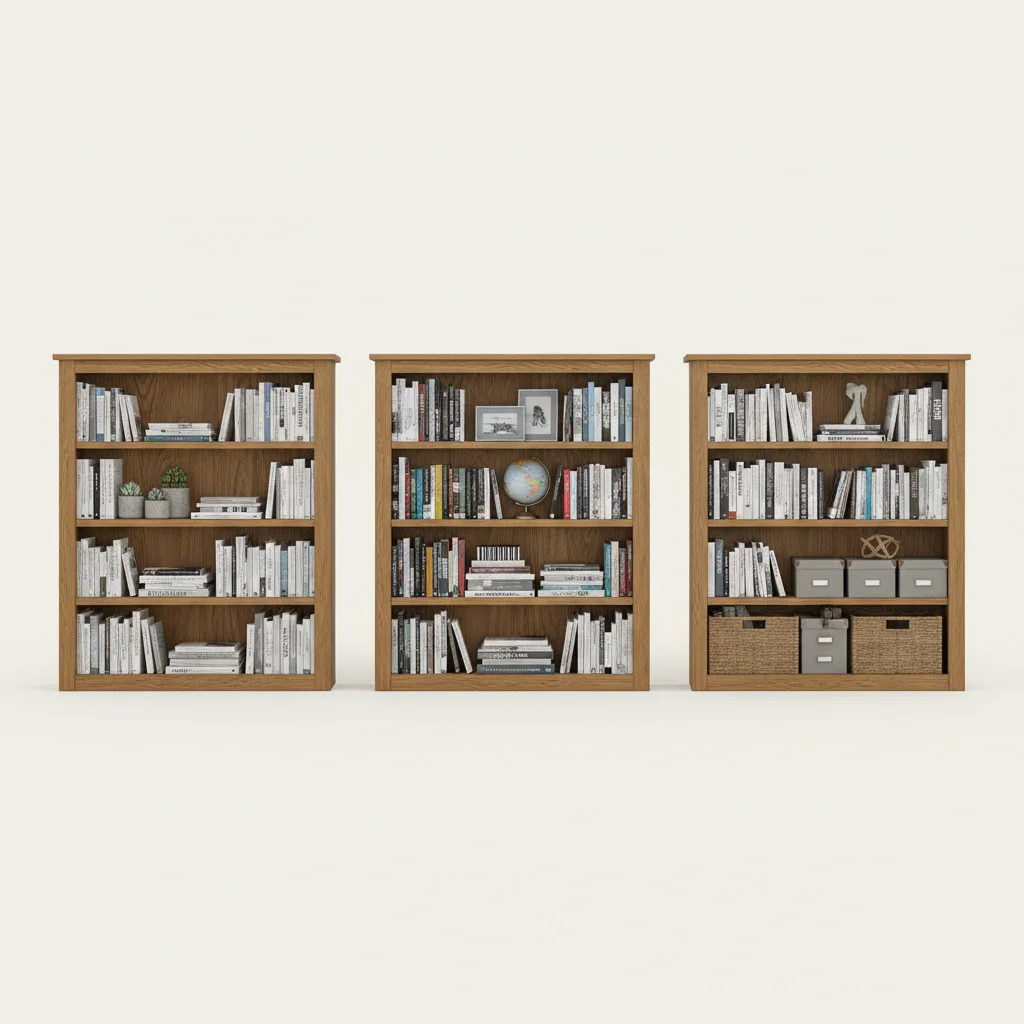
The ideal bookshelf depth for most standard paperbacks and hardcovers is between 8 to 12 inches. This range ensures your books are adequately supported without excessive wasted space, making it a crucial consideration for both aesthetics and functionality in your home.
Understanding Standard Bookshelf Depth
Standard bookshelf depths are designed to accommodate the vast majority of book sizes. A depth of 8 inches is often sufficient for paperbacks and smaller hardcovers, preventing them from being pushed too far back and becoming difficult to retrieve. For larger art books, coffee table books, or oversized editions, a depth closer to 12 inches or even 14 inches might be necessary to ensure proper support and prevent overhang.
When selecting or building a bookshelf, consider the primary type of books you intend to store. A mixed collection might benefit from varying shelf depths or a deeper overall unit to offer flexibility.
Optimizing Depth for Different Book Types
Different book types require different depths to be stored efficiently and attractively. Cookbooks, for instance, often have larger dimensions than typical novels, necessitating a deeper shelf. Children’s picture books, while sometimes wide, are generally not very deep, so a shallower shelf can work well, especially if you want to display their covers.
- Paperbacks and Standard Hardcovers: 8-10 inches
- Large Hardcovers and Textbooks: 10-12 inches
- Oversized Books and Albums: 12-14 inches
- Collector’s Editions and Display Items: 14+ inches (for specific display needs)
Careful planning ensures every book has its place without looking cramped or having too much empty space behind it.
The Impact of Bookshelf Depth on Room Aesthetics
The depth of your bookshelf significantly influences the visual appeal and perceived spaciousness of a room. A very deep bookshelf in a narrow hallway can make the space feel even more confined, while a shallower unit might blend in more seamlessly. Conversely, a deep, built-in bookshelf can create a sense of grandeur and library-like comfort in a larger living area.
Consider the overall scale of your room and other furniture pieces. A balanced approach to bookshelf depth ensures it complements your existing decor rather than overwhelming it. For smaller rooms, shallower shelves can be a practical choice, often paired with wall-mounting to maximize floor space.
Practical Considerations for Bookshelf Depth
|
Our Picks for the Best Book Shelf in 2026
As an Amazon Associate I earn from qualifying purchases.
|
||
| Num | Product | Action |
|---|---|---|
| 1 | VASAGLE CUSTOS Collection - Bookshelf, 6-Tier Bookcase, Book Shelf, Open Storage Shelf, 9.4 x 23.6 x 63.3 Inches, for Living Room, Home Office, Dinning Room, Cloud White ULBC166T14 |

|
| 2 | Mavivegue Bookcase, 18-Cube Extra Large Book Shelf, DIY Cube Storage Organizer for Bedroom, Living Room, Home Office - Black |
|
| 3 | NUMENN 5 Tier Bookshelf, Tall Bookcase Shelf Storage Organizer, Modern Book Shelf for Bedroom, Living Room and Home Office, Vintage |
|
| 4 | Furinno JAYA Book Shelf, 5-Tier Bookshelf, Bookcase with Adjustable Shelves, 9.5" x 24.5" x 71.2", for Organization and Storage, for Living Room, Bedroom, Home Office, Blackwood |
|
| 5 | DUMOS 5 Tiers Bookshelf, Classical Book Shelf, Tall Display Shelves in Living Room/Home/Office, Storage Organizer for CDs/Books/Movies, Modern Black |
|
| 6 | VASAGLE CUSTOS Collection - Bookshelf, 5-Tier Bookcase, Book Shelf, Open Storage Shelf, 9.4 x 23.6 x 52.8 Inches, for Living Room, Home Office, Dinning Room, Cloud White ULBC165T14 |
|
| 7 | NUMENN Triple Column 5 Tier Bookshelf, Bookcase with 14 Open Display Shelves, Adjustable Rustic Industrial Style Book Shelves, Modern Bookshelves for Bedroom, Living Room and Home Office, Vintage |
|
| 8 | NUMENN Bookshelf, 5 Tier Bookshelves, Home Office Bookcase Shelf Storage Organizer, Free Standing Storage Shelving Unit for Bedroom, Living Room and Home Office, Vintage |
|
| 9 | TVU 5-Tier Wooden Bookshelf, 65 Inch Tall Bookshelf with Storage, Floor Standing Modern Style Display Bookcase for Living Room, Office, Study Room, Entryway, Brown |
|
| 10 | VASAGLE Bookshelf, Tree-Shaped Bookcase with 13 Storage Shelves, Rounded Corners, 9.8”D x 33.9”W x 55.1”H, Rustic Brown ULBC67BXV1 |
|
Beyond aesthetics, practical factors play a role in determining the best bookshelf depth. Accessibility is key; you want to be able to easily reach and retrieve books without straining. If a shelf is too deep, smaller books can get lost at the back, making organization challenging. Conversely, shelves that are too shallow risk books toppling over or protruding excessively.
Also, think about the items you might store alongside books. Decorative objects, small plants, or framed photos might require a bit more depth than books alone.This flexibility can turn a simple bookshelf into a versatile display unit.
Customizing Bookshelf Depth for Unique Collections
For those with unique or specialized collections, customizing bookshelf depth can be a game-changer. If you collect antique atlases, oversized art books, or even vinyl records, standard depths may not suffice. Custom-built shelves allow you to specify the exact depth needed for each section, ensuring every item is perfectly housed.
This approach not only protects your valuable items but also creates a bespoke look that reflects your personal interests. While more of an investment, custom depths offer unparalleled functionality and a tailored aesthetic.It’s an excellent option for creating a truly personalized library space.
Maintaining Stability with Appropriate Depth
The depth of your bookshelf also contributes to its overall stability. While not the sole factor, a well-proportioned depth helps distribute weight more effectively, especially for taller units. Shelves that are too shallow for heavy books can be more prone to tipping, even when anchored. A deeper base often provides a more stable foundation.
Always ensure your bookshelf is properly anchored to the wall, regardless of its depth, especially in homes with children or pets. This added security prevents accidents and ensures your collection remains safe and sound.

Good info here, but I wish there was more on custom solutions. I have a lot of oversized art books, and even the 12-inch depth mentioned isn’t quite enough for some of them. It would be helpful to know if there are specific brands that offer deeper options without going fully custom.
This was super useful for planning my new home office. I was debating between a few different IKEA units, and knowing that 8-inch depth is good for most paperbacks helped me pick the right one. It looks much cleaner now that my books aren’t sticking out too far.
I’m so glad I read this before buying my new living room bookshelf. I have a lot of those big coffee table books, and I almost went with a standard 8-inch deep shelf. Realizing I needed something closer to 14 inches saved me a huge headache. Everything fits perfectly now!
I always wondered about the best depth for my books! This really helped me understand why my old shelves felt so awkward. I ended up getting a unit with 10-inch deep shelves, and it’s perfect for my mix of paperbacks and regular hardcovers. No more books getting lost in the back!