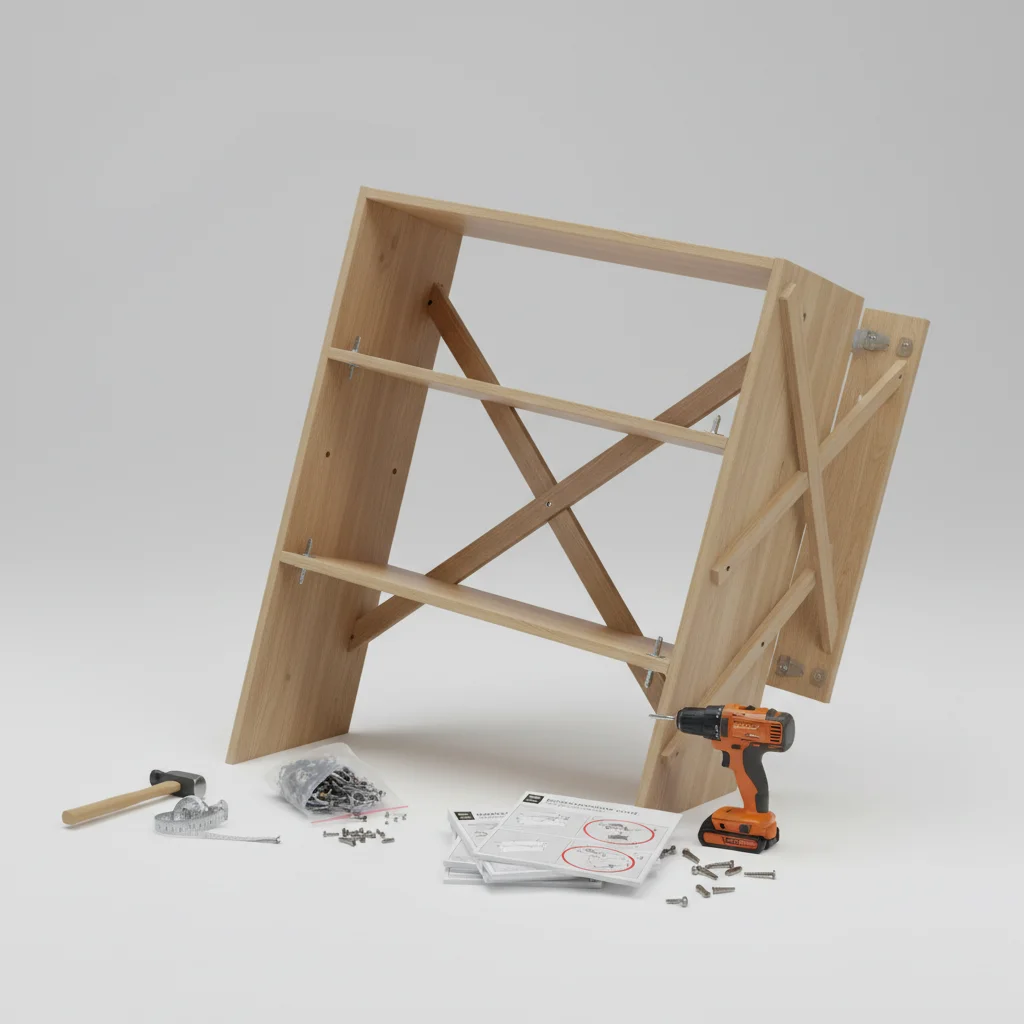
Assembling a bookshelf can seem straightforward, but there are 7 common mistakes that can compromise its stability and longevity. From overlooking crucial hardware to improper leveling, these errors can lead to wobbly shelves, damaged books, and even safety hazards. Understanding and avoiding these pitfalls will ensure your new storage solution is both sturdy and safe for years to come.
Ignoring the Instructions: A Recipe for Disaster
Many people are tempted to dive into bookshelf assembly without thoroughly reading the instructions. This is a common misstep that can lead to confusion, missing steps, and ultimately, an unstable unit. Always take the time to review the entire manual, identify all parts, and understand the sequence of steps before you begin. This proactive approach saves time and frustration in the long run. For best home furniture roundups on this site.
Skipping Pre-Drilling: Damaging Your Wood
When working with wood bookshelves, especially those made from solid wood or particle board, skipping the pre-drilling step for screws can cause the wood to split. This not only weakens the structure but also creates an unsightly finish. Always use a drill bit slightly smaller than the screw’s diameter to create pilot holes, ensuring a clean and secure connection without damaging the material.
Over-Tightening Screws: Stripping and Weakening
While it might seem logical to tighten screws as much as possible for maximum stability, over-tightening can be detrimental. It can strip the screw threads, damage the wood, or even crack the material, especially with particle board or MDF. Tighten screws until they are snug, then give them a quarter turn more. If you feel resistance, stop. This prevents damage and maintains the integrity of the bookshelf.
Neglecting Back Panels: Crucial for Squareness
|
Our Picks for the Best Book Shelf in 2026
As an Amazon Associate I earn from qualifying purchases.
|
||
| Num | Product | Action |
|---|---|---|
| 1 | NUMENN 5 Tier Bookshelf, Tall Bookcase Shelf Storage Organizer, Modern Book Shelf for Bedroom, Living Room and Home Office, Vintage |

|
| 2 | NUMENN Bookshelf, 5 Tier Bookshelves, Home Office Bookcase Shelf Storage Organizer, Free Standing Storage Shelving Unit for Bedroom, Living Room and Home Office, Vintage |
|
| 3 | VASAGLE CUSTOS Collection - Bookshelf, 5-Tier Bookcase, Book Shelf, Open Storage Shelf, 9.4 x 23.6 x 52.8 Inches, for Living Room, Home Office, Dinning Room, Cloud White ULBC165T14 |
|
| 4 | Mavivegue Bookcase, 18-Cube Extra Large Book Shelf, DIY Cube Storage Organizer for Bedroom, Living Room, Home Office - Black |
|
| 5 | TVU 5-Tier Wooden Bookshelf, 65 Inch Tall Bookshelf with Storage, Floor Standing Modern Style Display Bookcase for Living Room, Office, Study Room, Entryway, Brown |
|
| 6 | NUMENN Triple Column 5 Tier Bookshelf, Bookcase with 14 Open Display Shelves, Adjustable Rustic Industrial Style Book Shelves, Modern Bookshelves for Bedroom, Living Room and Home Office, Vintage |
|
| 7 | VASAGLE Bookshelf, Tree-Shaped Bookcase with 13 Storage Shelves, Rounded Corners, 9.8”D x 33.9”W x 55.1”H, Rustic Brown ULBC67BXV1 |
|
| 8 | VASAGLE CUSTOS Collection - Bookshelf, 6-Tier Bookcase, Book Shelf, Open Storage Shelf, 9.4 x 23.6 x 63.3 Inches, for Living Room, Home Office, Dinning Room, Cloud White ULBC166T14 |
|
| 9 | DUMOS 5 Tiers Bookshelf, Classical Book Shelf, Tall Display Shelves in Living Room/Home/Office, Storage Organizer for CDs/Books/Movies, Modern Black |
|
| 10 | Furinno JAYA Book Shelf, 5-Tier Bookshelf, Bookcase with Adjustable Shelves, 9.5" x 24.5" x 71.2", for Organization and Storage, for Living Room, Bedroom, Home Office, Blackwood |
|
The back panel of a bookshelf, often made of thin fiberboard, might seem insignificant, but it plays a vital role in the unit’s structural integrity. It helps to square the frame, preventing racking and wobbling. Failing to attach it correctly, or omitting it entirely, will significantly reduce the bookshelf’s stability. Ensure the back panel is properly aligned and secured with all provided fasteners.
Improper Leveling: The Root of Instability
Even a perfectly assembled bookshelf will be unstable if it’s not level. An uneven floor can cause the unit to rock, putting stress on joints and potentially leading to collapse. Always use a spirit level to check the bookshelf’s levelness from front to back and side to side. Adjust the feet or use shims as needed until the unit is perfectly stable. This is a critical step for long-term durability.
- Always read the entire instruction manual before starting.
- Pre-drill pilot holes for screws to prevent wood splitting.
- Tighten screws until snug, avoiding over-tightening.
- Securely attach the back panel for structural integrity.
- Level the bookshelf meticulously to prevent wobbling.
Ignoring Wall Anchoring: A Safety Hazard
For taller or heavier bookshelves, ignoring wall anchoring is a significant safety risk, especially in homes with children or pets. Wall anchors prevent the bookshelf from tipping over, which can cause serious injury or damage. Always use the provided anti-tip hardware and follow the instructions for securely attaching the bookshelf to a wall stud.This simple step can prevent tragic accidents and is a non-negotiable for safety.
Using the Wrong Tools: Compromising the Build
Using the wrong tools for bookshelf assembly can lead to stripped screws, damaged parts, and an overall poor build quality. While a basic screwdriver might suffice for some steps, a power drill with appropriate bits can make the process much smoother and more precise. Ensure you have all the necessary tools before you begin, including a rubber mallet for tapping in dowels and a measuring tape for accurate placement.Investing in the right tools ensures a professional and durable finish for your bookshelf.
