Are your precious books overflowing, creating chaotic stacks around your living space? The dream of a beautifully organized collection often bumps into the reality of expensive furniture. But what if you could craft a sturdy, stylish bookshelf without breaking the bank? Building a DIY wood bookshelf on a tight budget is not only possible but also incredibly rewarding, offering a personalized touch that store-bought options can’t match.
This guide will empower you to create functional and attractive book storage. We will delve into various budget-friendly bookshelf types, explore cost-effective materials like plywood and even reclaimed wood, and walk you through essential building techniques and finishing tips. Whether you’re a seasoned DIYer or just starting, you’ll find the knowledge here to construct the perfect home for your books.
Types of Budget-Friendly DIY Bookshelves
When aiming for an affordable DIY bookshelf, understanding the different types available can help you choose a design that matches your skill level, budget, and aesthetic preferences. Each style offers unique advantages and challenges.
Crate Bookshelves
Crate bookshelves represent one of the simplest and most budget-friendly approaches to book storage. Utilizing readily available wooden crates, these modular units can be stacked and arranged in countless configurations.
- Advantages and Disadvantages: Their primary appeal lies in their ease of assembly and low cost, with some projects costing under $30 for a set of bookcases. They offer a charming, rustic aesthetic and are highly modular, allowing for flexible arrangements. However, they may offer limited storage capacity compared to traditional shelves and might require securing with metal braces or screws for increased stability, especially if stacked high. The rustic look might not seamlessly blend with all interior design styles.
- Suitable Spaces: Crate bookshelves are ideal for casual living areas, children’s rooms, dorms, or small apartments where a temporary or reconfigurable solution is needed. Their compact size makes them perfect for filling small nooks.
- Installation and Maintenance: Assembly often involves simply stacking the crates, then optionally securing them with screws and metal braces for added stability. Before use, lightly sanding the crates can smooth any rough edges, which is typically the most labor-intensive part of the project. Minimal maintenance is required; occasional dusting or wiping them down will suffice.
|
Our Picks for the Best Book Shelf in 2026
As an Amazon Associate I earn from qualifying purchases.
|
||
| Num | Product | Action |
|---|---|---|
| 1 | Mavivegue Bookcase, 18-Cube Extra Large Book Shelf, DIY Cube Storage Organizer for Bedroom, Living Room, Home Office - Black |

|
| 2 | NUMENN 5 Tier Bookshelf, Tall Bookcase Shelf Storage Organizer, Modern Book Shelf for Bedroom, Living Room and Home Office, Vintage |
|
| 3 | NUMENN Triple Column 5 Tier Bookshelf, Bookcase with 14 Open Display Shelves, Adjustable Rustic Industrial Style Book Shelves, Modern Bookshelves for Bedroom, Living Room and Home Office, Vintage |
|
| 4 | TVU 5-Tier Wooden Bookshelf, 65 Inch Tall Bookshelf with Storage, Floor Standing Modern Style Display Bookcase for Living Room, Office, Study Room, Entryway, Brown |
|
| 5 | VASAGLE CUSTOS Collection - Bookshelf, 6-Tier Bookcase, Book Shelf, Open Storage Shelf, 9.4 x 23.6 x 63.3 Inches, for Living Room, Home Office, Dinning Room, Cloud White ULBC166T14 |
|
| 6 | VASAGLE CUSTOS Collection - Bookshelf, 5-Tier Bookcase, Book Shelf, Open Storage Shelf, 9.4 x 23.6 x 52.8 Inches, for Living Room, Home Office, Dinning Room, Cloud White ULBC165T14 |
|
| 7 | VASAGLE Bookshelf, Tree-Shaped Bookcase with 13 Storage Shelves, Rounded Corners, 9.8”D x 33.9”W x 55.1”H, Rustic Brown ULBC67BXV1 |
|
| 8 | DUMOS 5 Tiers Bookshelf, Classical Book Shelf, Tall Display Shelves in Living Room/Home/Office, Storage Organizer for CDs/Books/Movies, Modern Black |
|
| 9 | Furinno JAYA Book Shelf, 5-Tier Bookshelf, Bookcase with Adjustable Shelves, 9.5" x 24.5" x 71.2", for Organization and Storage, for Living Room, Bedroom, Home Office, Blackwood |
|
| 10 | NUMENN Bookshelf, 5 Tier Bookshelves, Home Office Bookcase Shelf Storage Organizer, Free Standing Storage Shelving Unit for Bedroom, Living Room and Home Office, Vintage |
|
Plywood or MDF Bookshelves (Freestanding/Built-in)
For those seeking a more traditional and robust bookshelf structure, building with plywood or MDF (Medium-Density Fiberboard) offers excellent value. These materials provide versatility for creating both freestanding units and custom built-in solutions.
- Advantages and Disadvantages: Plywood is known for its strength and resistance to splitting, making it a good choice for shelves that will hold heavy books. MDF offers a remarkably smooth finish and is easy to cut, making it great for painted projects. Both materials are significantly more affordable than solid hardwood. However, plywood’s exposed edges typically need finishing, such as edge banding, for a polished look. MDF is quite heavy, can sag under extreme weight, and requires an oil-based primer before painting to prevent swelling. Building with these materials generally requires more precise cuts and tools compared to crate designs.
- Suitable Spaces: These types of bookshelves are highly adaptable for various rooms, including living rooms, home offices, bedrooms, or even custom libraries. Built-in versions can seamlessly integrate into specific architectural features, such as alcoves or under staircases.
- Construction and Application: The construction involves cutting large sheets into precisely sized panels for sides, tops, bottoms, and shelves. Joinery typically uses screws, nails, and wood glue. For built-in applications, MDF is often favored due to its smooth surface and ease of manipulation for a custom fit. Pine and birch plywood are commonly recommended budget-friendly choices, offering a good balance of strength and cost.
Floating and Wall-Mounted Shelves
Floating and wall-mounted shelves are excellent choices for maximizing space in compact areas and achieving a sleek, minimalist aesthetic. They create an illusion of lightness by appearing to “float” without visible supports.
- Advantages and Disadvantages: Their main benefits include significant space-saving and a modern, uncluttered look. They are ideal for displaying a few select books, decorative items, or plants. However, floating shelves typically have load capacity limits, especially if made with lighter materials, and require secure anchoring to wall studs for safety. If not using hidden brackets, the mounting hardware might be visible, impacting the “floating” effect.
- Suitable Spaces: These shelves are perfect for small apartments, hallways, above desks in home offices, or in any room where you want to add visual interest without occupying floor space. They are particularly good for creating small book nooks.
- Installation and Maintenance: Proper installation involves using a stud finder to locate wall studs and securely screwing mounting brackets into them. For a true floating effect, specialized hidden shelf brackets can be used. Regular dusting is usually the only maintenance needed. Ensure the chosen material and mounting method can adequately support the weight of your books.
Comparing Budget Bookshelf Materials
Choosing the right material is crucial for a DIY bookshelf, impacting its cost, durability, and aesthetic. Here’s a comparison of common budget-friendly wood and wood-like options.
| Criteria | Plywood | MDF (Medium-Density Fiberboard) | Common Boards (Pine, 1x lumber) | Reclaimed/Scrap Wood (e.g., crates, pallets) |
|---|---|---|---|---|
| Price | Moderate (Pine is cheapest plywood, birch is mid-range) | Very Low | Low | Very Low/Zero |
| Durability | Strong, resists splitting, good for heavy books | Less durable, prone to sagging under heavy loads, vulnerable to moisture | Can warp or knot, less stable for wide shelves | Varies greatly based on source material, often robust |
| Aesthetics | Can have visible layers; often requires edge banding | Smooth, uniform surface; excellent for painting | Natural wood grain; can have knots | Rustic, unique character; may have imperfections |
| Workability | Requires good blades to prevent tear-out; can be heavy | Easy to cut, smooth rips; very heavy to handle | Easy to cut and work with | Can be challenging due to varied conditions and sizes |
| Finishing Notes | Edge banding recommended for exposed edges; takes stain/paint well | Requires oil-based primer before painting to prevent swelling | Takes stain and paint well; gel stains good for knots | Often requires significant sanding, cleaning, and preparation |
“For truly budget-conscious projects, looking beyond new lumber to reclaimed wood or even repurposed items like wooden crates can yield incredibly unique and affordable results.” – Alex Chen, DIY Furniture Expert
DIY Bookshelf Building Guide
Building your own bookshelf, even on a tight budget, requires careful planning and execution. This guide breaks down the process into manageable steps, from initial design to the final touches.
Planning Your Project
Before any cuts are made, a solid plan is essential. This stage helps clarify your needs and ensures a smoother building process.
- Assess Needs: Begin by evaluating the number and size of books you intend to store. Do you have many oversized art books, or mostly standard paperbacks? This will dictate shelf depth and height. Consider the available space in your home, measuring the width, height, and depth carefully. Finally, think about the overall aesthetic you want to achieve – rustic, modern, traditional – as this will influence material and finish choices.
- Design: Sketching out your bookshelf design is a critical step. A simple drawing that details the number of shelves, their spacing, and overall dimensions will serve as your blueprint. Remember the tip about determining bookshelf height: subtract at least 4 inches from your ceiling height to allow for standing the assembled unit upright.
- Tool List: For basic DIY bookshelves, essential tools include a drill, circular saw (with a guide for straight cuts), measuring tape, and sandpaper or sanding blocks. For more advanced projects, a pocket hole jig for stronger joinery or a router for decorative edges can be beneficial. Don’t hesitate to borrow tools from friends to save money.
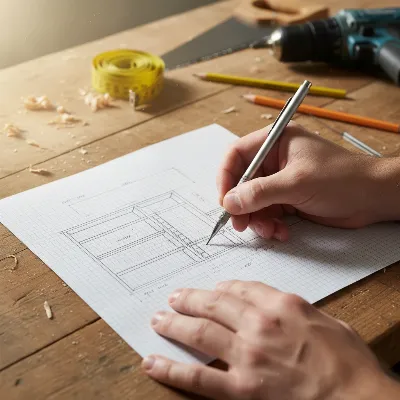 A person sketching a bookshelf design on paper with measurements and a pencil, surrounded by various hand tools.
Cutting and Preparation
Precise cuts and proper preparation are fundamental to a successful and sturdy bookshelf. Taking your time here will prevent issues later.
- Accurate Cuts: The quality of your cuts directly impacts the final appearance and stability of your bookshelf. Use a circular saw with a straight edge guide to ensure all pieces are cut squarely. For larger sheets like plywood or MDF, rip the largest pieces first before making smaller crosscuts.
- Sanding: Once cut, all edges, especially those that will be visible, should be sanded smooth. Even with inexpensive materials like wooden crates, a medium-grit sanding sponge can make a significant difference in the finished feel and safety. This step also prepares the wood for painting or staining.
- Pre-drilling: To prevent wood from splitting when inserting screws, especially with plywood or common boards, always pre-drill pilot holes. Using a drill bit with a countersink will allow screw heads to sit flush with the surface for a cleaner look.
Assembly Techniques
Assembling your bookshelf is where your plan comes to life. Simple yet effective techniques can ensure a strong and square structure.
- Simple Joinery: For budget-friendly bookshelves, wood glue combined with screws or finishing nails provides strong joints. Apply a thin bead of wood glue along the edges before fastening the pieces together.
- Squaring: It’s crucial to maintain squareness throughout assembly. Use a large carpenter’s square to check corners as you attach shelves and side panels. An out-of-square bookshelf will not sit flush against a wall and can look unprofessional.
- Spacers: A clever trick for consistent shelf spacing is to cut scrap pieces of 2x4s or similar wood to the exact distance you want between shelves. Use these spacers during assembly to quickly and accurately position each shelf. Lay the side panels down, attach spacers, place the shelf, and then fasten it.
- Backing: Adding a thin back panel, often made from Luan, thin plywood, or even beadboard, significantly increases the bookshelf’s stability and prevents “racking” (where the unit leans to one side). Nail or staple the backing into place, ensuring the bookshelf is square before attaching.
Finishing Touches
The finishing stage transforms raw wood into a polished piece of furniture, protecting it and enhancing its aesthetic appeal.
- Edge Banding: For plywood bookshelves, edge banding is essential to cover the exposed, unattractive layers of plywood. This thin strip of wood veneer or PVC can be ironed or glued onto the edges, creating a seamless, finished look.
- Filling Holes and Seams: After assembly, fill all nail holes, screw holes, and any visible seams with wood filler or caulk. This creates a smooth surface for painting. Allow the filler to dry completely, then sand it flush.
- Priming & Painting/Staining: The final step involves applying your chosen finish. If using MDF, an oil-based primer is 100% necessary to prevent the material from swelling when paint is applied. For other woods, choose between a wood stain to highlight the grain or paint for a specific color. Gel stains are excellent for woods prone to blotching, like pine, and for unsanded surfaces.
Top Budget-Friendly Bookshelf Ideas
Here are a few popular and highly effective budget-friendly bookshelf ideas that you can tackle. These options prioritize cost-effectiveness and relatively simple construction while still delivering functional and attractive storage.
1. Stacked Crate Bookshelf
This is arguably the most straightforward and cheapest DIY bookshelf option.
- Advantages: Incredibly easy to assemble (often just stacking), highly customizable and modular, offers a charming rustic aesthetic. You can create a decent-sized unit for under $30.
- Disadvantages: Limited weight capacity per crate, may require securing with metal braces or screws for stability, rustic look may not fit all décors.
- Cost: Very low (around $10-15 per crate, plus minimal hardware).
- Where to Buy Materials: Craft stores (like Michael’s for unfinished wooden milk crates), hardware stores, or even look for used crates online or at markets.
2. Basic Plywood Bookshelf with Edge Banding
A classic and versatile option that provides significant storage and a cleaner look than crates, while still being budget-conscious.
- Advantages: Highly customizable in size and configuration, sturdy enough for heavy books (especially birch plywood), smooth finish when properly prepared and edge-banded.
- Disadvantages: Requires more precise cutting tools, edge banding adds an extra step.
- Cost: Moderate (pine plywood is the most budget-friendly option, followed by birch). A single sheet of ¾-inch plywood can yield multiple shelves.
- Where to Buy Materials: Home improvement stores (Home Depot, Lowe’s) for plywood, common boards for trim, and edge banding.
3. Floating Pine Shelves
For a minimalist approach, floating shelves offer style and functionality without taking up floor space.
- Advantages: Sleek and modern aesthetic, excellent for small spaces, can be made with relatively few materials. Visually declutters a room.
- Disadvantages: Typically designed for lighter loads compared to freestanding units, requires secure mounting to wall studs, hidden brackets can be slightly more complex to install.
- Cost: Low to moderate, depending on the wood species and bracket type. Pine is a very affordable wood choice.
- Where to Buy Materials: Lumber yards or home improvement stores for pine boards, specialized hardware stores or online for floating shelf brackets.
Conclusion
Building a DIY wood bookshelf on a tight budget is an accessible and fulfilling project that can dramatically enhance your home’s organization and aesthetic. By exploring simple designs like stacked crates, leveraging cost-effective materials like plywood and MDF, and applying fundamental woodworking techniques, you can create a custom storage solution that perfectly fits your needs and style. The process not only saves money but also instills a sense of accomplishment, transforming your space with a piece crafted by your own hands.
Which budget-friendly bookshelf project will you tackle first to transform your space and finally give your cherished books the home they deserve?
Frequently Asked Questions
What is the cheapest material for a DIY bookshelf?
The cheapest materials for a DIY bookshelf often include wooden milk crates, reclaimed lumber, or inexpensive sheet goods like Luan plywood for backing. For structural components, pine plywood or MDF offer excellent value, with MDF typically being the most cost-effective sheet material.
How can I prevent my DIY bookshelf shelves from sagging?
To prevent shelves from sagging, use appropriate material thickness (e.g., ¾-inch plywood for main shelves), limit shelf span by adding vertical supports, and consider adding a solid hardwood strip to the front edge of plywood shelves for reinforcement. A sturdy back panel also adds significant structural rigidity.
What tools do I need for a basic DIY wooden bookshelf?
For a basic DIY wooden bookshelf, you’ll generally need a measuring tape, a pencil, a circular saw (with a guide for straight cuts), a drill with appropriate bits (including a countersink), wood glue, screws or finishing nails, and sandpaper or a sanding block.
Can I make an adjustable shelf on a budget?
Yes, you can make adjustable shelves on a budget. Instead of permanently screwing shelves in place, you can drill shelf pin holes into the side panels of your bookshelf and use inexpensive shelf pins. Ensure your shelves are cut slightly smaller than the opening width to allow for easy adjustment.
How do I secure a DIY bookshelf to the wall?
To secure a DIY bookshelf to the wall, especially if it’s tall or holds heavy items, first locate wall studs using a stud finder. Then, use screws to attach the bookshelf’s top or back support pieces directly into the studs. You can also use metal L-brackets for added stability.
