Transforming a simple bookshelf from mere storage into a captivating display can feel like an art form, leaving many wondering how to achieve that polished, designer-curated look. If you’ve ever found yourself staring at a blank or cluttered shelf, unsure how to begin, you’re not alone. This guide will demystify the secrets interior designers use to create stunning, balanced, and deeply personal bookshelf vignettes, offering you the knowledge to elevate your own home decor.
Understanding the Designer’s Approach to Bookshelf Styling
Beyond Storage: Bookshelves as a Design Element
|
Our Picks for the Best Book Shelf in 2026
As an Amazon Associate I earn from qualifying purchases.
|
||
| Num | Product | Action |
|---|---|---|
| 1 | NUMENN Triple Column 5 Tier Bookshelf, Bookcase with 14 Open Display Shelves, Adjustable Rustic Industrial Style Book Shelves, Modern Bookshelves for Bedroom, Living Room and Home Office, Vintage |

|
| 2 | VASAGLE CUSTOS Collection - Bookshelf, 5-Tier Bookcase, Book Shelf, Open Storage Shelf, 9.4 x 23.6 x 52.8 Inches, for Living Room, Home Office, Dinning Room, Cloud White ULBC165T14 |
|
| 3 | Mavivegue Bookcase, 18-Cube Extra Large Book Shelf, DIY Cube Storage Organizer for Bedroom, Living Room, Home Office - Black |
|
| 4 | NUMENN 5 Tier Bookshelf, Tall Bookcase Shelf Storage Organizer, Modern Book Shelf for Bedroom, Living Room and Home Office, Vintage |
|
| 5 | DUMOS 5 Tiers Bookshelf, Classical Book Shelf, Tall Display Shelves in Living Room/Home/Office, Storage Organizer for CDs/Books/Movies, Modern Black |
|
| 6 | TVU 5-Tier Wooden Bookshelf, 65 Inch Tall Bookshelf with Storage, Floor Standing Modern Style Display Bookcase for Living Room, Office, Study Room, Entryway, Brown |
|
| 7 | Furinno JAYA Book Shelf, 5-Tier Bookshelf, Bookcase with Adjustable Shelves, 9.5" x 24.5" x 71.2", for Organization and Storage, for Living Room, Bedroom, Home Office, Blackwood |
|
| 8 | VASAGLE Bookshelf, Tree-Shaped Bookcase with 13 Storage Shelves, Rounded Corners, 9.8”D x 33.9”W x 55.1”H, Rustic Brown ULBC67BXV1 |
|
| 9 | NUMENN Bookshelf, 5 Tier Bookshelves, Home Office Bookcase Shelf Storage Organizer, Free Standing Storage Shelving Unit for Bedroom, Living Room and Home Office, Vintage |
|
| 10 | VASAGLE CUSTOS Collection - Bookshelf, 6-Tier Bookcase, Book Shelf, Open Storage Shelf, 9.4 x 23.6 x 63.3 Inches, for Living Room, Home Office, Dinning Room, Cloud White ULBC166T14 |
|
Bookshelves are far more than just practical repositories for your literary collection; they are powerful opportunities to infuse personality, texture, and visual interest into any room. An interior designer views a bookshelf as a three-dimensional canvas, a focal point that can anchor a space and reflect the homeowner’s story and aesthetic. When styled thoughtfully, shelves can make a room feel complete, polished, and uniquely yours, acting as an extension of your home’s architecture and an expression of your design vision.
The “Less is More” Philosophy: Curating, Not Cluttering
The hallmark of a designer-styled bookshelf is a sense of thoughtful curation rather than overwhelming clutter. It’s about creating breathing room, allowing each object to be seen and appreciated. This “less is more” approach means making conscious choices about what stays and what goes, ensuring that every item contributes to the overall aesthetic and narrative. Designers often emphasize the importance of negative space, recognizing that empty areas are just as crucial as filled ones in achieving visual balance and a sophisticated look.
Essential Principles for Designer Bookshelf Styling
Achieving a professional look for your bookshelves involves adhering to several core design principles. These guidelines ensure your display is cohesive, visually engaging, and reflects a discerning eye.
The Clean Slate Method: Starting Fresh
Before any styling begins, the first and most crucial step is to empty your shelves completely. This seemingly daunting task provides a fresh perspective, allowing you to re-evaluate each item and its potential placement without the distraction of existing arrangements. Starting with a blank canvas empowers you to reconsider relevance and create a truly intentional design from the ground up, ensuring that every piece earns its spot.
Mastering the Art of Balance: Books and Objects in Harmony
A beautifully styled bookshelf expertly balances its namesake books with an array of decorative objects. While books are the foundation, they shouldn’t dominate every inch of space. Interior designers intermix books with sculptures, vases, personal mementos, and other curiosities to create visual breaks and varied points of interest. The goal is to alternate between books and decor, avoiding overcrowding and fostering a relaxed, curated feel that invites the eye to linger.
Playing with Scale and Proportion: Varying Heights and Shapes
One of the quickest ways to elevate a bookshelf’s appearance is by incorporating items of varying heights and shapes. A common mistake is using objects that are all the same size, which can lead to a flat, uninteresting display. Instead, mix tall and short, wide and narrow pieces to create a dynamic visual rhythm. Books can be stacked horizontally to serve as pedestals for smaller objects, or they can stand upright to introduce vertical lines, grounding the arrangement with a few larger items like art or substantial vases.
Creating Depth Through Layering
Layering is a powerful technique that adds dimension and sophistication to your bookshelf. Designers strategically place larger items at the back of the shelf, with smaller objects positioned in front. For example, leaning a piece of art or a framed photograph against the back wall and then placing a decorative object like a candle or a small sculpture in front of it instantly adds depth. This multi-dimensional approach prevents the display from looking flat and makes the arrangement feel more dynamic and professionally composed.
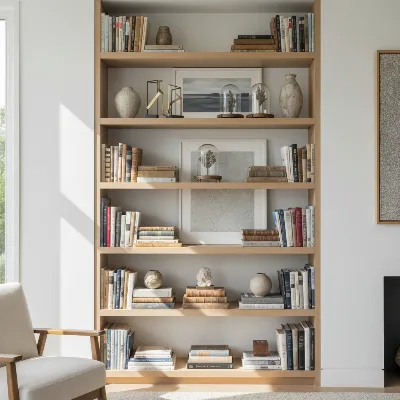 A beautifully styled bookshelf showcasing depth through layering, with larger items at the back and smaller objects in front, creating visual interest and dimension in a modern living room.
The Power of Grouping: The Rule of Three (and Odd Numbers)
Interior designers frequently employ the “rule of three,” or more generally, the use of odd numbers when grouping objects. Grouping items in threes or fives tends to be more visually appealing and natural to the human eye than even groupings. This principle helps create vignettes – small, artfully arranged scenes – on each shelf, making the overall display more harmonious and less rigid. When arranging these groups, vary the heights, textures, and forms within each cluster for maximum impact.
Color Harmony and Texture Play
A cohesive color palette is a cornerstone of professional bookshelf styling. Select two to three complementary colors that harmonize with the room’s overall design, opting for a neutral base with subtle pops of accent colors, or a sophisticated monochromatic scheme. Beyond color, introduce a variety of textures through materials like wood, metal, ceramics, glass, and textiles. This tactile diversity adds richness and visual interest, making the display feel more luxurious and well-thought-out, even with a limited color scheme.
Key Elements to Incorporate in Your Bookshelf Design
To truly style your bookshelf like an interior designer, consider the specific elements you’ll use and how they contribute to the overall aesthetic.
Books as Foundation and Decor
Books are, naturally, the soul of a bookshelf, but how they are arranged can make all the difference.
- Arranging Vertically and Horizontally: Don’t just line all your books up vertically. Mix it up! Stack some horizontally to create visual blocks and platforms for smaller objects. This variation adds rhythm and prevents a monotonous line of spines.
- Color-coding (Optional) or Tonal Grouping: While not always necessary, arranging books by color can create a striking, aesthetically pleasing effect, especially in minimalist or contemporary spaces. Alternatively, group books by tonal range or by subject matter for a more subtle and organic look. Adding antique books can also introduce a unique texture and sense of history.
Decorative Objects: Vases, Sculptures, and Trinkets
These are the elements that inject personality and artistry. Think about a variety of shapes and materials. A tall, slender vase next to a round, textured sculpture creates immediate interest. Consider objects that resonate with your personal style or travels, avoiding anything that feels generic or doesn’t contribute meaningfully to the aesthetic.
Natural Touches: Plants and Greenery
Bringing in natural elements instantly adds life, warmth, and a refreshing organic touch to your shelves. Small potted plants like succulents, air plants, or even trailing varieties can break up the hard lines of books and objects. If natural light is an issue, high-quality faux plants can offer a similar aesthetic benefit without the maintenance.
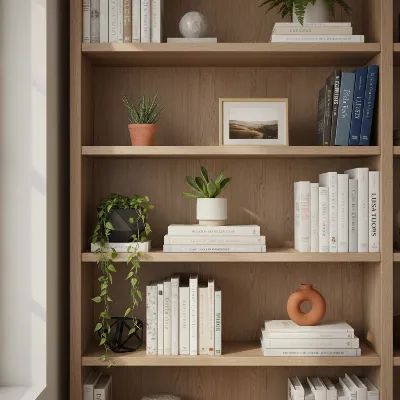 A stylish bookshelf featuring a mix of books, decorative items, and vibrant green plants that add life and warmth to the display in a contemporary home setting.
Personalized Touches: Art, Photos, and Mementos
Your shelves are a reflection of you. Integrate items with personal significance, such as framed family photos, travel souvenirs, treasured heirlooms, or small pieces of art. These elements make the space feel unique, inviting, and tell your story, moving beyond a purely decorative display to something truly meaningful.
Adding Depth and Interest: Mirrors and Framed Art
Beyond leaning art against the back, don’t be afraid to hang smaller pieces of artwork directly in front of the shelves or within the shelf space. Mirrors can also be incredibly effective, especially in deeper shelves, by reflecting light and creating an illusion of greater depth. A small, decorative mirror can break up a solid wall of books and add a sophisticated touch.
Strategic Lighting: Enhancing Ambiance
Consider integrating subtle lighting into your bookshelf design. Small LED strip lights, puck lights, or even a strategically placed small table lamp can highlight your curated items and create a warm, inviting ambiance, particularly in the evenings. This adds another layer of visual interest and functionality.
Step-by-Step Guide to Styling Your Bookshelf
Styling a bookshelf might seem complex, but by following a structured approach, you can achieve a professional look with ease.
Clear and Declutter
As emphasized earlier, begin by removing every item from your shelves. This “clean slate” allows for a fresh perspective and helps you evaluate each piece objectively. Wipe down the shelves, and if possible, give them a fresh coat of paint or liner to truly start anew.
Gather Your Elements
Before you start placing anything, gather all the items you might want to use: your books, decorative objects, plants, photos, and any potential art pieces. Lay them out on a nearby table or the floor. This allows you to see your entire collection and begin to conceptualize groupings and color schemes. Shop your home first; you likely have many treasures already.
Place Your Anchor Pieces
Start with the largest items that will provide structure and weight to your display. These could be substantial vases, large sculptures, or even baskets placed on the bottom shelves. Placing heavier, larger objects at the base helps to ground the bookshelf and creates a sense of stability.
Arrange Books Strategically
Begin placing your books, varying their orientation between vertical and horizontal stacks. Distribute them across different shelves, ensuring they don’t dominate any single section. Aim for a mix, using horizontal stacks to create platforms for other items. Remember, books are your foundation.
Integrate Decorative Objects and Personal Items
Once your books are in place, start adding your decorative objects, plants, and personal mementos. Remember the rule of three, grouping items in odd numbers. Distribute these pieces unevenly across the shelves, creating small vignettes rather than a uniform pattern.
Layer and Refine
Introduce depth by layering. Lean framed art or photos against the back of the shelf, then place smaller objects in front. Ensure there’s variation in height and texture within each layered grouping. This step brings dimension and visual richness to your display.
Step Back and Edit
Regularly step back from your bookshelf to view it from a distance. This helps you assess the overall balance, identify areas that might be too cluttered or too sparse, and notice any elements that feel out of place. Don’t be afraid to rearrange, remove, or swap items until the composition feels just right. This iterative process of editing is crucial for achieving a designer-approved finish.
Common Bookshelf Styling Mistakes to Avoid
Even with the best intentions, it’s easy to fall into common styling pitfalls. Being aware of these can help you avoid them.
Overcrowding
One of the most frequent mistakes is trying to fit too many items onto the shelves. This results in a cluttered, visually overwhelming display that diminishes the beauty of individual pieces. Remember the “less is more” philosophy and embrace negative space.
Ignoring Scale and Variety
Using items that are all the same size or shape creates a monotonous look. A bookshelf styled without varied scale (tall, short, wide, narrow) lacks visual interest and feels flat. Always mix up the dimensions of your objects.
Lack of Cohesion
If your bookshelf looks like a random assortment of items without a unifying theme, color palette, or style, it will appear disjointed. Strive for a cohesive look through chosen colors, textures, or even the subject matter of your books and objects.
Too Few Books (on a Bookshelf!)
While balancing books with decor is key, a bookshelf styled with an almost complete absence of books can look out of place. Books are the foundation and provide inherent texture and interest. Don’t shy away from using them abundantly if you’re aiming for a maximalist look, or as a strong structural element in any style.
Conclusion
Styling a bookshelf like an interior designer is about more than just filling empty spaces; it’s about thoughtful curation, strategic arrangement, and infusing personality into your home. By embracing principles like starting with a clean slate, balancing books with decorative objects, varying heights and textures, and layering for depth, you can transform your shelves into captivating focal points. Remember to personalize your display with meaningful items and continually step back to refine your arrangement. Which of these designer tips will you incorporate first to elevate your bookshelf?
Câu Hỏi Thường Gặp
How often should I restyle my bookshelves?
There’s no strict rule for how often to restyle your shelves; it often depends on your mood or the season. Some people prefer to keep their styling consistent year-round, while others enjoy refreshing their displays more frequently, perhaps with seasonal decor or new finds, to keep the space feeling vibrant and new.
What are the best types of objects for bookshelf styling?
The best objects for bookshelf styling include a mix of decorative vases, unique sculptures, personal mementos, framed photos or art, and natural elements like plants. The key is to choose items with varying heights, shapes, and textures that complement your room’s aesthetic and reflect your personal style.
How do I style a deep or tall bookshelf?
For deep or tall bookshelves, utilize larger objects to match the scale of the space. Incorporate oversized art, substantial ceramics, and larger decorative pieces. Don’t be afraid to stack or layer multiple items to fill the depth effectively. Thinking in terms of “filling forms” can help create impactful vignettes on a larger scale.
Can I use only books on my bookshelf?
While bookshelves are designed for books, a display consisting solely of books can sometimes appear monotonous. Interior designers typically recommend intermixing books with decorative objects to create visual interest, depth, and a more curated, less cluttered look. However, if you have a vast collection and prefer a purely literary aesthetic, focus on varying book orientations (horizontal/vertical) and subtle color or size groupings.
